
Filters you can trust. Pure water every day.
In cart {{totalProductsCount}} item(s)
Your cart is empty
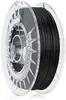
Filament ROSA-PLAST PC/PBT +15% CF 1.75 mm 0.5 kg — Black
ROSA-PLAST PC/PBT +15% CF 1.75 mm 0.5 kg — Black is a carbon-fiber reinforced filament formulated from a polycarbonate/polybutylene terephthalate blend with 15% short carbon fibers. It is intended for FDM/FFF 3D printing of parts that require higher stiffness, improved heat resistance and enhanced dimensional stability compared with standard polymers. The 1.75 mm diameter and 0.5 kg spool weight suit desktop and industrial printers that accept this filament format and provide a balance between material availability and handling.
The PC/PBT matrix with 15% carbon fiber increases tensile stiffness and reduces thermal deformation while maintaining good impact performance for many functional applications. Carbon fiber reinforcement lowers part warpage and improves dimensional accuracy during cooling. The filament’s black color provides uniform appearance for functional prototypes and mechanical components. This material offers a combination of heat resistance, rigidity and printability suitable for applications where standard PLA or ABS would be insufficient.
Load the filament into a 3D printer configured for abrasive or fiber-filled materials if possible, and use a hardened steel or wear-resistant nozzle to reduce abrasion. Set printing temperatures according to the printer manufacturer's recommendations for PC/PBT blends and perform test prints to determine optimum extrusion temperature and cooling settings. Use a heated build plate and appropriate build-surface adhesion to minimise warping; enclosure is recommended for improved thermal stability during printing. Monitor print speed and retraction: moderate speeds and tuned retraction reduce stringing and improve layer bonding.
For longer nozzle life, use hardened or coated nozzles and avoid brass. Pre-dry the filament before printing if the filament has been stored in humid conditions. Calibrate extrusion multiplier and first-layer settings on test coupons prior to printing critical parts. When designing parts, account for the material’s increased stiffness and anisotropic strength due to fiber orientation; orient critical load-bearing features to align fibers with expected loads when possible.
{{highlightedFeature.featureTitle}}:
{{getProductFeatureValueById(product, highlightedFeature.featureId)}}
{{ productComparisonGenerationError }}