
Leave your address - as soon as the price of the product goes down, you'll know about it right away
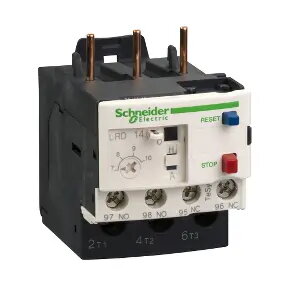
Schneider Electric LRD14 Thermal Overload Relay 7-10A
In cart {{totalProductsCount}} item(s)
Your cart is empty
Schneider Electric LRD14 Thermal Overload Relay 7-10A
Leave your address - as soon as the price of the product goes down, you'll know about it right away
Schneider Electric LRD14 Thermal Overload Relay 7-10A
The Schneider Electric LRD14 is a professional-grade thermal overload relay engineered to provide dependable protection for electric motors. This device is specifically designed to monitor current flow and disconnect the circuit in the event of an overload or phase failure, thereby preventing costly motor damage and ensuring the longevity of industrial electrical systems. With an adjustable current range of 7-10A and a robust construction, it serves as a critical component in maintaining operational continuity and safety within complex automation setups.
The primary benefit of the Schneider Electric LRD14 lies in its precise thermal protection capabilities, which allow for accurate calibration within the 7-10A range to match specific motor requirements. Its durable design is built to withstand the rigors of industrial environments, offering high reliability and consistent performance over time. By integrating this relay into your electrical panel, you gain a compact yet powerful solution that simplifies motor management while significantly reducing the risk of downtime caused by electrical faults.
This thermal overload relay is not intended for applications requiring current ratings outside the 7-10A range. It is also not suitable for direct-on-line starting of motors that exceed its specified thermal capacity or for environments where electronic soft starters or variable frequency drives are already providing integrated motor protection.
The LRD14 relay is designed for direct mounting onto compatible contactors. Installation involves securing the relay to the contactor terminals and connecting the motor supply cables to the output terminals. Once installed, the current setting dial on the front of the device must be adjusted to match the full-load current rating of the motor being protected. Periodic testing of the trip mechanism is recommended to ensure the device remains functional.
Always ensure the power supply is disconnected before installing or adjusting the relay. Regularly inspect the terminals for tightness and ensure the device is free from dust or debris to maintain optimal thermal sensing performance.
{{highlightedFeature.featureTitle}}:
{{getProductFeatureValueById(product, highlightedFeature.featureId)}}