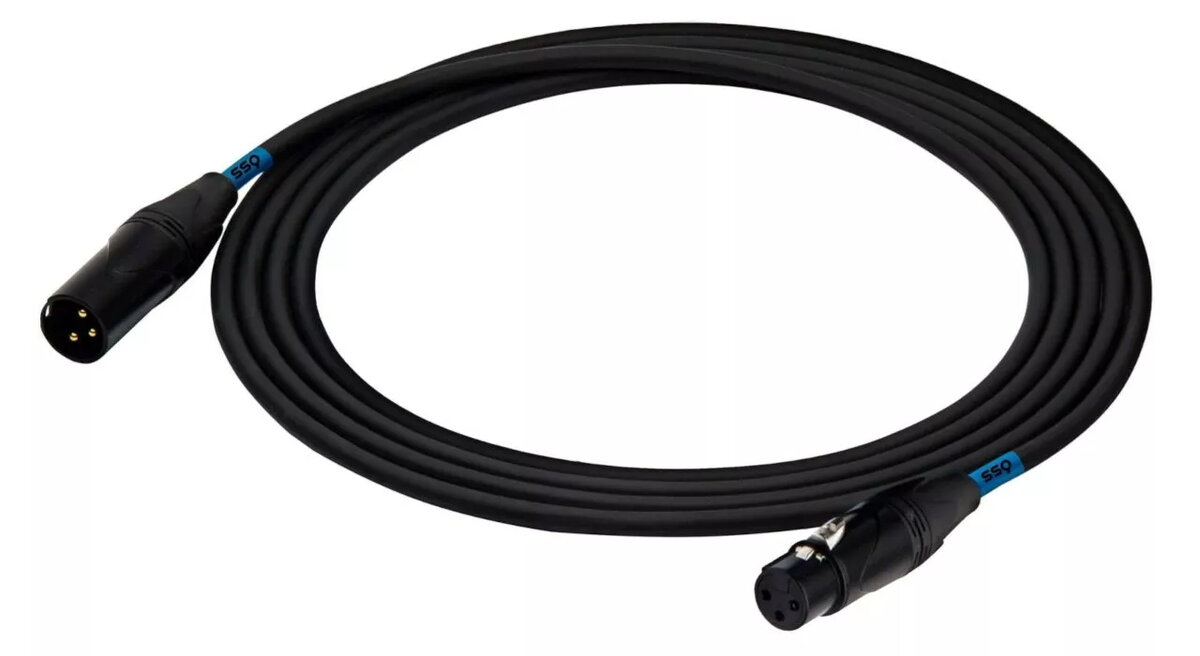
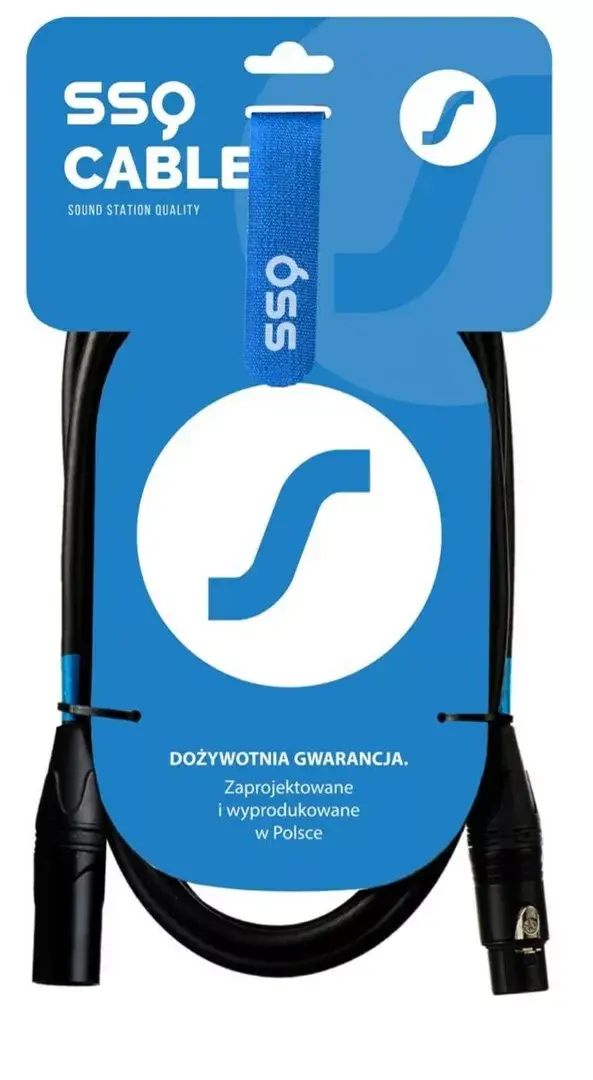
SSQ Cable XX15 (model SS-1414) is a 15-metre XLR-to-XLR microphone cable designed for balanced analogue audio connections. The cable provides male and female three-pin XLR terminations and is suited to stage, studio and live sound environments where rejection of interference and stable signal transfer are important. Its length and balanced wiring make it appropriate for connecting microphones, DI boxes and other low-level audio sources to mixers, preamps and powered inputs over longer runs.
Advantages
The SSQ XX15 offers a balanced audio path that reduces hum and noise on long runs. Durable XLR connectors provide reliable mating and strain resistance for repeated use, while the 15 m length gives flexibility for stage placement and studio setups. The construction is focused on consistent analogue signal transfer, maintaining microphone-level integrity for vocal and instrument sources.
Suitable for
- Connecting microphones to mixing consoles, preamps or stage boxes
- Live sound setups where 15 m run length is required
- Studio recording sessions for vocal and instrument capture
- Linking DI boxes, outboard gear and snake inputs with balanced connections
When it may not be suitable
This cable is intended for balanced analogue microphone-level signals; it is not designed for digital audio formats such as AES/EBU or for carrying high-voltage power. For very short runs where minimal cable capacitance is critical, a shorter or purpose-designed low-capacitance cable may be preferable. It is also not a microphone with built-in electronics—any active functionality must be provided by connected devices.
Key specifications
- Cable type: balanced analogue microphone cable
- Connector types: male XLR (3-pin) to female XLR (3-pin)
- Length: 15 metres
- Intended signal level: microphone/line-level (analogue)
- Typical applications: stage, studio, live sound
How to use
Connect the female XLR end to the microphone or source output and the male XLR end to the mixer, preamp or stage box input. Ensure connectors are fully seated and locked where applicable to prevent accidental disconnection. Route the cable to avoid tight bends, kinks and areas of high electromagnetic interference; use proper cable management or ties to keep runs tidy and to reduce wear. When disconnecting, grip the connector body rather than pulling the cable jacket.
What to consider before purchase
- Confirm that you require a 15 m balanced XLR-to-XLR cable for microphone or line-level analogue connections
- Check connector gender to match your equipment (male XLR to equipment inputs, female XLR to microphone outputs)
- Consider run length and stage routing to ensure 15 m is appropriate
- Verify that you do not need a cable for digital audio, instrument jack, or power delivery
Usage recommendations
For best performance, keep the cable away from high-current power lines and fluorescent lighting. Coil and store the cable without tight knots; when using on stage, secure runs with gaffer tape to prevent tripping and connector strain. Regularly inspect connectors for dirt or bent pins and replace the cable if shielding or jacket damage is apparent.