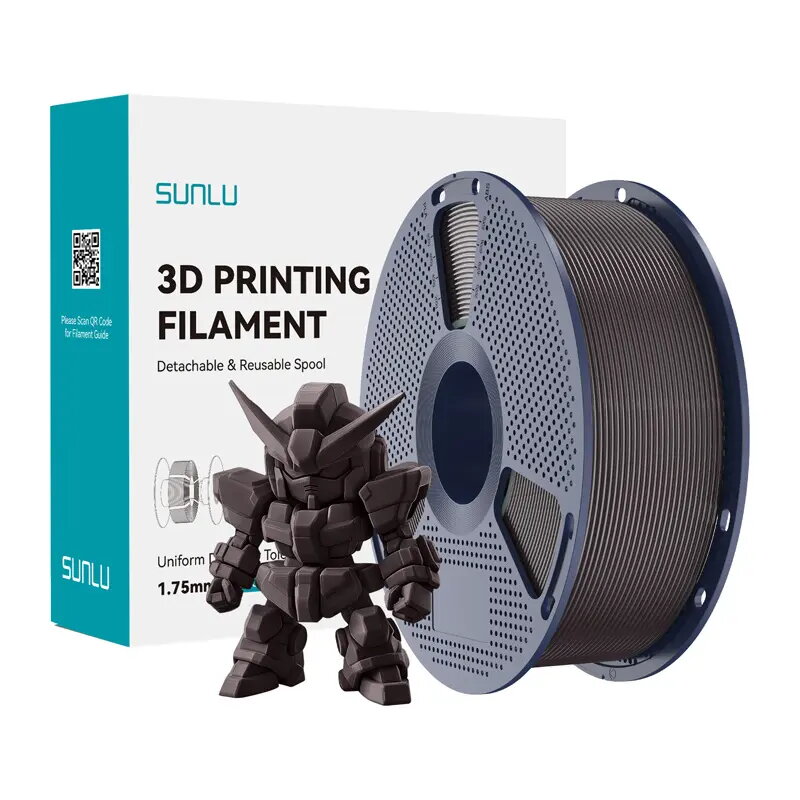
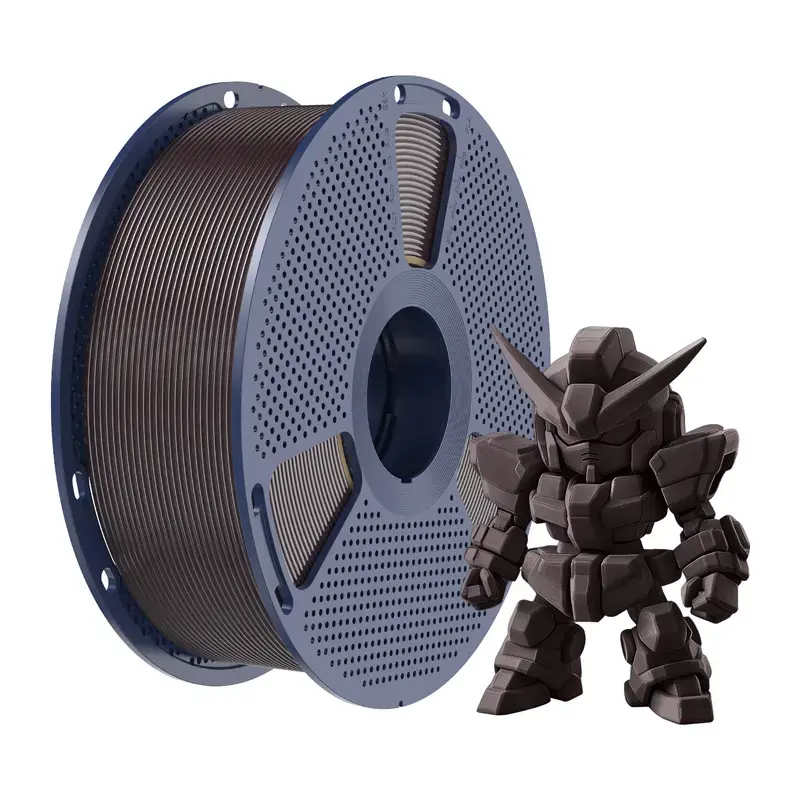
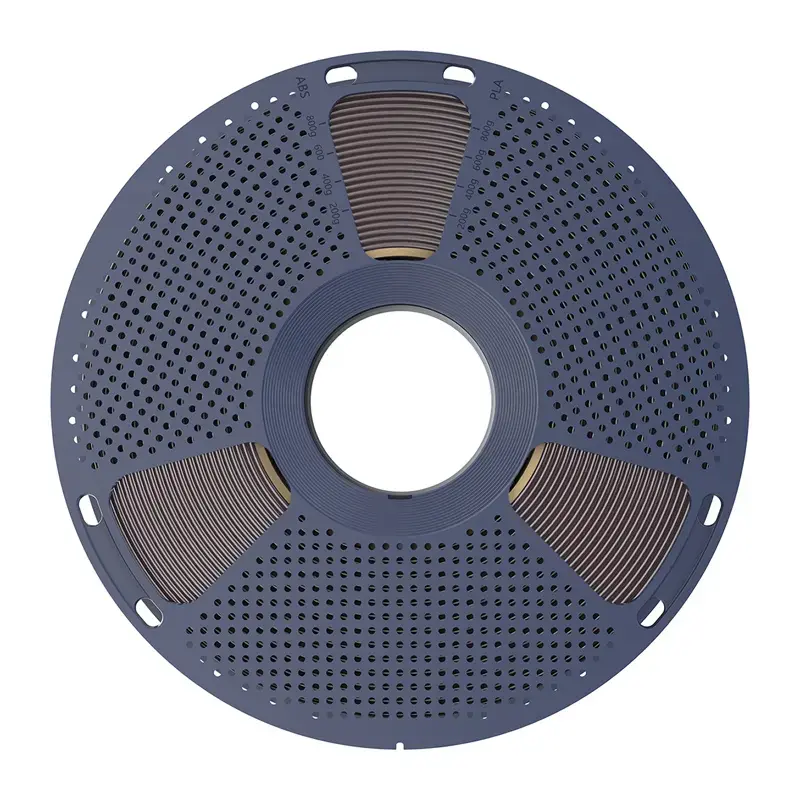
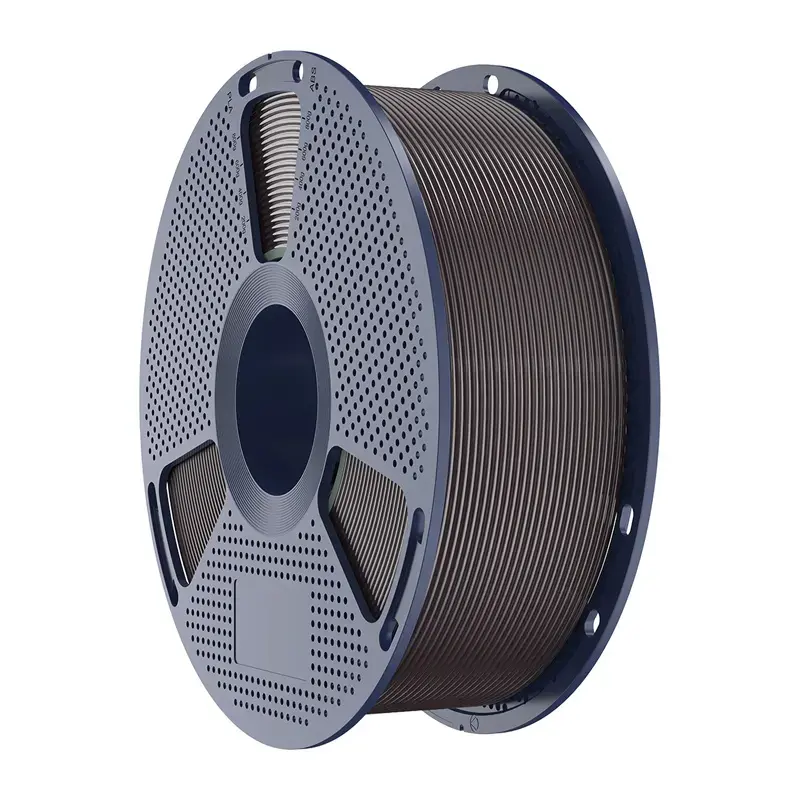
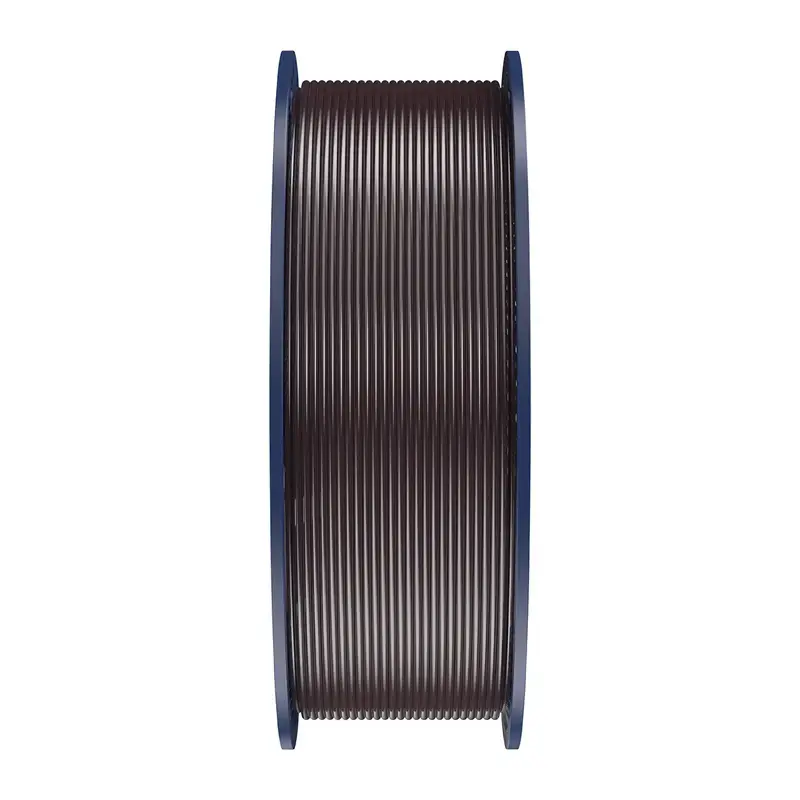
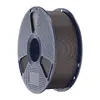
We are comparing Sunlu PLA+ 2.0 Filament Roasted Chestnut with alternative options from the same manufacturer and material family: Sunlu PLA+ Filament (Black), Sunlu PLA+ 2.0 Filament Light Blue, PLA+ 2.0 Filament by Sunlu, Ivory, Sunlu PLA+ Filament (Green), and PLA+ 2.0 Filament by Sunlu — Beige. All these products are 1.75 mm 3D printing filaments supplied on 1 kg spools made from an enhanced PLA+ material. The main differences between them lie purely in color and formula generation (version 2.0 versus standard PLA+ variants), which influences aesthetics, while core mechanical properties such as improved toughness and reduced brittleness compared to standard PLA remain shared across all options.
⚙️ Below is a comparison of key characteristics, such as filament diameter, spool weight, material base, formula generation, and color, to help you evaluate the technical traits of each option.
| Parameter | Sunlu PLA+ 2.0 Filament Roasted Chestnut | Sunlu PLA+ Filament (Black) | Sunlu PLA+ 2.0 Filament Light Blue | PLA+ 2.0 Filament by Sunlu, Ivory | Sunlu PLA+ Filament (Green) | PLA+ 2.0 Filament by Sunlu — Beige | Practical significance |
|---|
| Filament diameter | 1.75 mm | 1.75 mm | 1.75 mm | 1.75 mm | 1.75 mm | 1.75 mm | Ensures full compatibility with standard desktop 3D printers and FDM/FFF extruders. |
| Spool weight | 1 kg | 1 kg | 1 kg | 1 kg | 1 kg | 1 kg | Standard material quantity for most home and small-scale printing tasks. |
| Material | PLA+ | PLA+ | PLA+ | PLA+ | PLA+ | PLA+ | Guarantees improved toughness and layer adhesion compared to regular PLA. |
| Generation | PLA+ 2.0 | PLA+ (standard) | PLA+ 2.0 | PLA+ 2.0 | PLA+ (standard) | PLA+ 2.0 | Version 2.0 offers a refined formula for even better printing results. |
| Color | Roasted Chestnut | Black | Light Blue | Ivory | Green | Beige | Determines the visual appearance and final aesthetics of the printed object. |
◎ The table below evaluates the suitability of each product for various use cases, helping you choose the right color shade and material version for your specific creative or functional projects.
| Use case | Recommended product | Why |
|---|
| Printing decorative models in warm brown tones | Sunlu PLA+ 2.0 Filament Roasted Chestnut | The refined 2.0 formula and rich chestnut shade are ideal for interior decorative parts. |
| Creating classic functional parts and technical prototypes | Sunlu PLA+ Filament (Black) | The universal black color effectively masks print lines and suits technical components. |
| Manufacturing household accessories and light-colored figures | Sunlu PLA+ 2.0 Filament Light Blue or PLA+ 2.0 Filament by Sunlu, Ivory | The light tones of the 2.0 lineup work exceptionally well for home items and detailed models. |
Your choice among these filaments depends entirely on the desired color and formula version. Sunlu PLA+ 2.0 Filament Roasted Chestnut is best suited for projects requiring a deep brown hue and the enhanced 2.0 formula benefits, delivering improved toughness and surface finish compared to baseline modifications.