
Dreame vacuums for fast and efficient cleaning!
In cart {{totalProductsCount}} item(s)
Your cart is empty
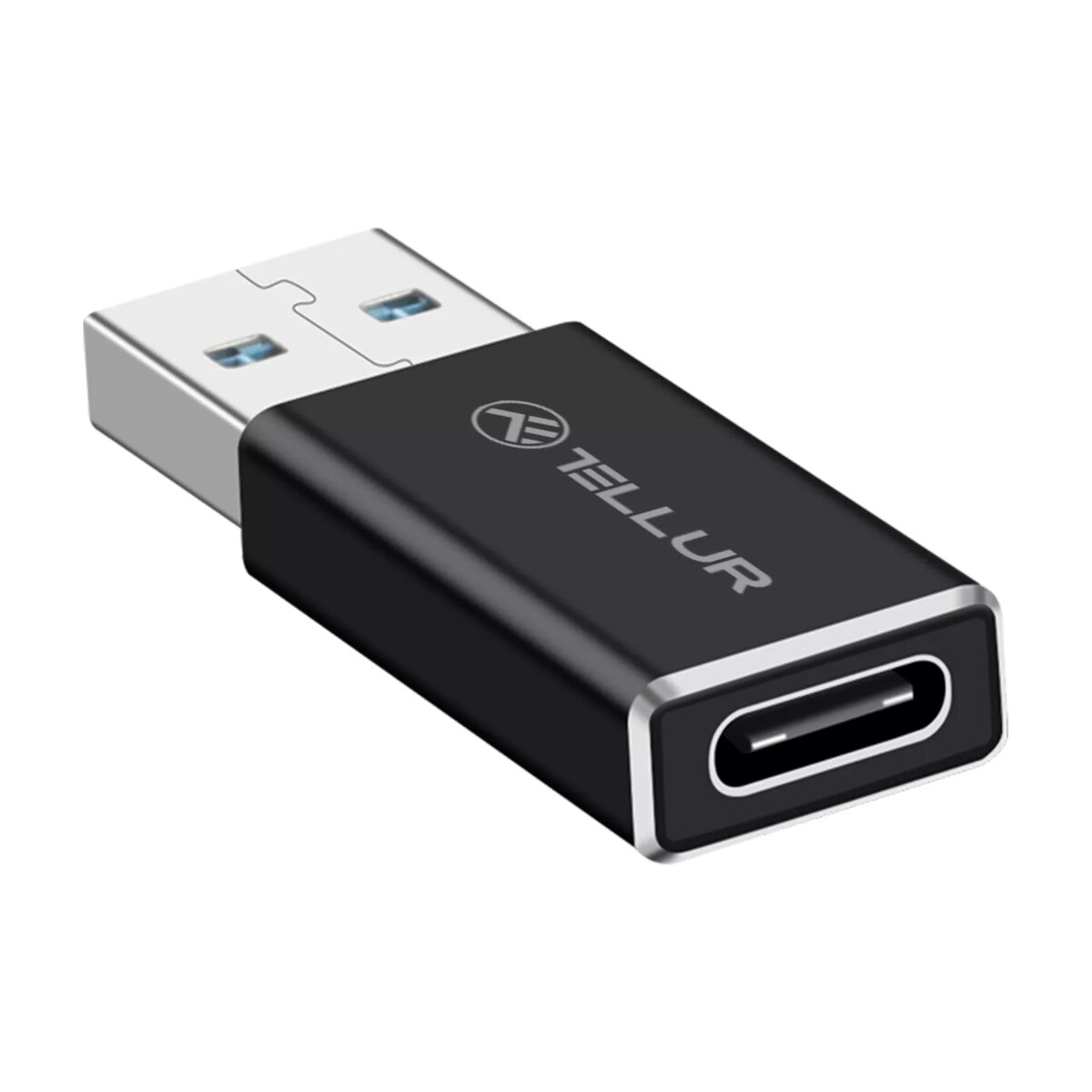
USB-A to USB-C adapter Tellur TLL155681 — USB 3.0 compatibility, up to 5 Gbps data transfer
The Tellur TLL155681 USB-A to USB-C adapter provides a compact and practical solution for connecting USB-C devices to older USB-A ports. Supporting USB 3.0 performance with transfer speeds up to 5 Gbps, this adapter enables data syncing and file transfer between modern peripherals and legacy hosts without drivers. Its small form factor makes it easy to carry and use with laptops, desktops and external storage devices when a native USB-C port is not available.
This adapter offers plug-and-play compatibility with USB-A ports while preserving high-speed USB 3.0 data rates up to 5 Gbps. The compact and lightweight design reduces desk clutter and is convenient for travel. It allows connection of USB-C flash drives, smartphones, external SSDs and other peripherals to USB-A hosts. The straightforward construction ensures reliable physical connection and minimal setup effort.
Insert the USB-A end of the adapter into an available USB-A port on the host device. Plug the USB-C device (for example a flash drive, smartphone cable, or external SSD) into the USB-C connector on the adapter. The host should recognize the connected device automatically and allow file transfers at USB 3.0 speeds where supported. No software installation is typically required for standard file and peripheral access.
Use the adapter with devices that require standard USB data connectivity; avoid relying on the adapter for high-current charging or features that require USB-C power delivery negotiation. For sustained high-performance use with external drives, connect through a port that supports USB 3.0 or higher on the host. Store the adapter in a protective pouch to prevent dust or damage to the connectors when not in use.
{{highlightedFeature.featureTitle}}:
{{getProductFeatureValueById(product, highlightedFeature.featureId)}}
{{ productComparisonGenerationError }}