
Save time and money with our discounts!
In cart {{totalProductsCount}} item(s)
Your cart is empty
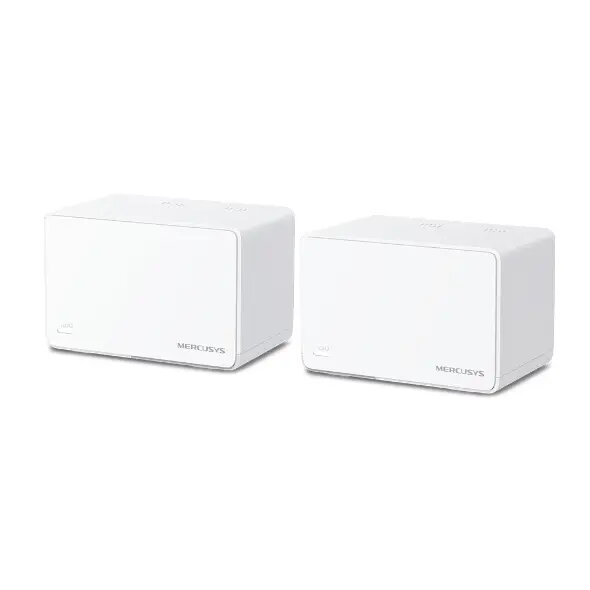
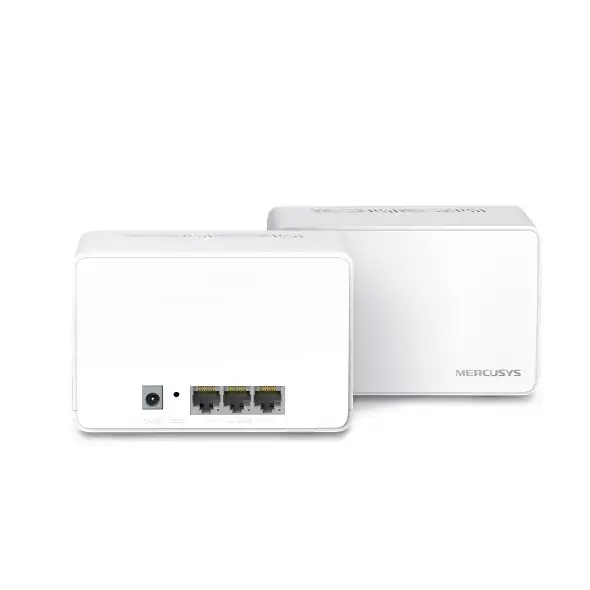
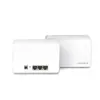
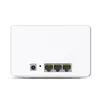
Mesh system TP-Link Halo H3000X Dual-band Wi-Fi 6 2402 Mbit/s
The TP-Link Halo H3000X Dual-band Wi-Fi 6 mesh system delivers whole-home wireless coverage with a maximum WLAN data transfer rate of 2402 Mbit/s. Designed for homes and small offices, the system combines Wi‑Fi 6 performance, dual-band operation (2.4 GHz and 5 GHz) and internal antennas in a compact white enclosure to provide consistent connectivity across multiple rooms.
The Halo H3000X uses Wi‑Fi 6 (802.11ax) to increase network capacity and improve efficiency when many devices are connected. Dual-band operation enables separation of traffic between 2.4 GHz and 5 GHz, helping to balance range and throughput. Internal antennas keep the exterior clean while providing stable signal distribution. The system is optimized for easy setup and seamless roaming across nodes so client devices switch automatically to the strongest access point without manual reconfiguration.
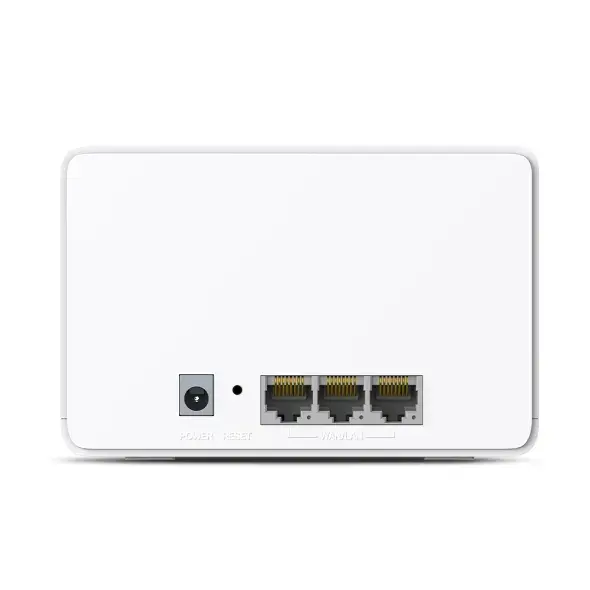
Position the Halo H3000X nodes in open areas around the home to achieve even coverage, avoiding dense obstructions and large metal objects. Connect one node to your modem via an Ethernet cable to act as the main gateway, then power and place additional nodes in rooms where signal needs strengthening. Use the TP‑Link mobile app to follow guided setup steps and configure network name (SSID), password and basic settings. Once configured, client devices will connect automatically to the node providing the best signal.
For optimal performance, place nodes on elevated surfaces and maintain line‑of‑sight where possible. Use the 5 GHz band for bandwidth‑intensive activities like 4K streaming and gaming, and reserve the 2.4 GHz band for longer‑range devices and IoT equipment. Update firmware through the app when updates are available to ensure security and improved compatibility.
{{highlightedFeature.featureTitle}}:
{{getProductFeatureValueById(product, highlightedFeature.featureId)}}
{{ productComparisonGenerationError }}