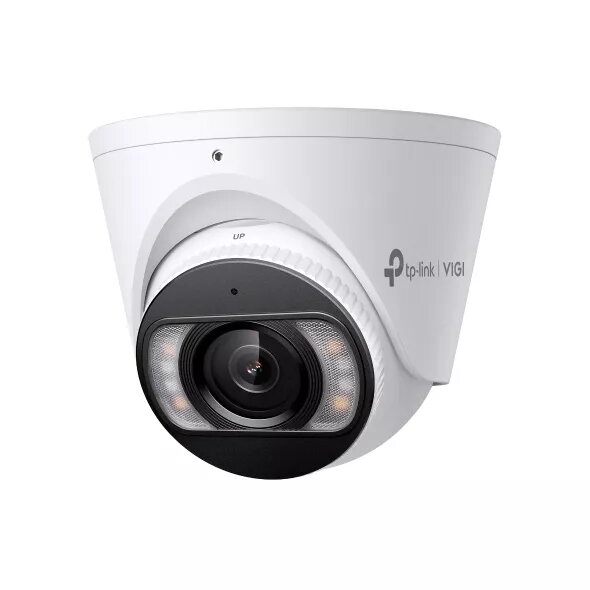
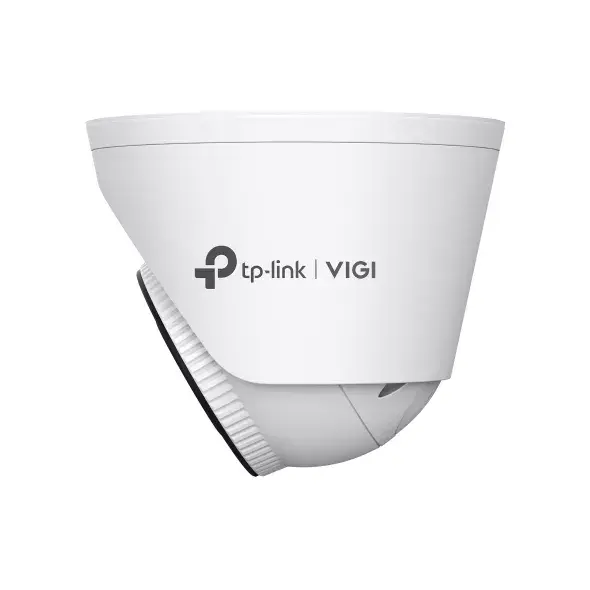
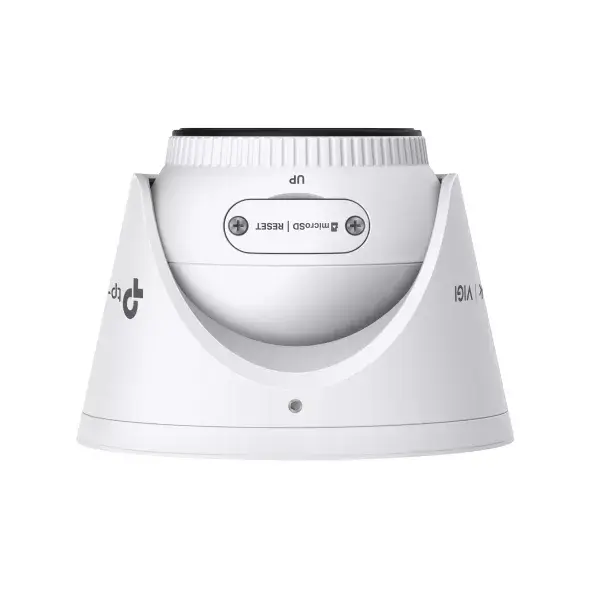
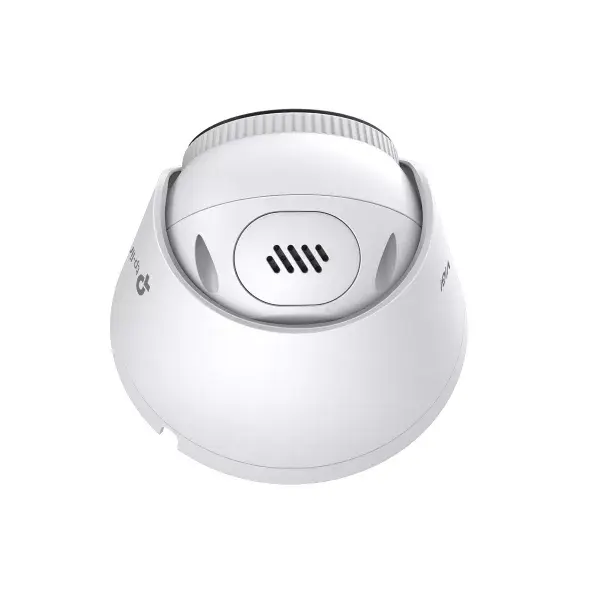
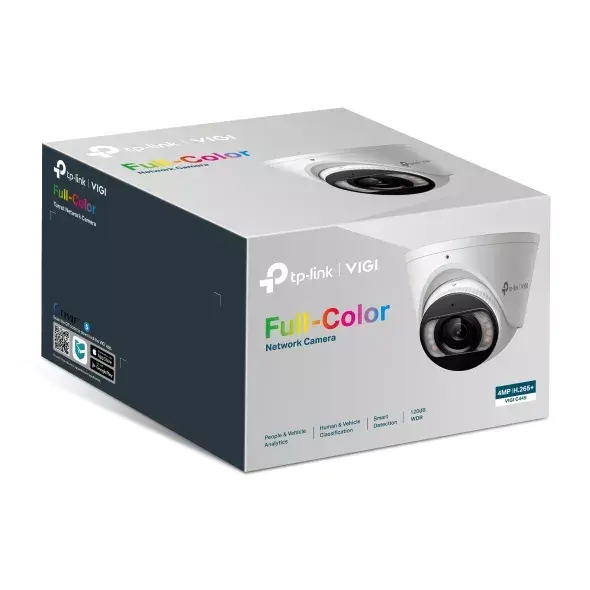
-
Type:
Characteristics of the device.
-
IP security camera
-
Weight:
Weight of the product without packaging (net weight). If possible, the net weight is given including standard accessories and supplies. Please note that sometimes the manufacturer leaves out the weight of accessories and/or supplies.
-
0.48 kg
-
Supported network protocols:
Network protocols tested as compatible with this product e.g. FTP,HTML, POP.
-
TCP/IP, UDP, ICMP, HTTP, HTTPS, DHCP, DNS, RTSP, NTP, UPnP UDP, SSL/TLS
-
Operating relative humidity (H-H):
-
0 - 95
-
Storage temperature (T-T):
The minimum and maximum temperatures at which the product can be safely stored.
-
-40 - 60
-
Form factor:
The shape or design of the product.
-
Turret
-
Built-in microphone:
Microphone that is found inside the product.
-
Yes
-
Operating temperature (T-T):
The minimum and maximum temperatures at which the product can be safely operated.
-
-30 - 60
-
Camera shutter speed:
Determines the length of time the shutter lets light pass through the lens to the CCD. Shutter speed and aperture together determine exposure.
-
1/3 - 1/10000
-
Ethernet LAN:
An Ethernet LAN (Local Area Network) interface is present, for a wired conection via a cable.
-
Yes
-
Storage relative humidity (H-H):
-
0 - 95
-
Height:
The measurement of the product from head to foot or from base to top.
-
83.7 mm
-
Focal length range:
Measure of how strongly the system converges or diverges light. For an optical system in air, it is the distance over which initially collimated rays are brought to a focus. A system with a shorter focal length has greater optical power than one with a long focal length; that is, it bends the rays more strongly, bringing them to a focus in a shorter distance.For an optical system in air, the effective focal length (f and f′) gives the distance from the front and rear principal planes (H and H′) to the corresponding focal points (F and F′).
-
4
-
Signal-to-Noise Ratio (SNR):
This is the ratio of signal intensity to noise intensity.
-
52 dB
-
Sensor type:
A sensor is a convertor than measures a physical quality (light, temperature etc.) and displays this electronically on a device.
-
CMOS
-
Minimum illumination:
Also known as light sensitivity, this is the smallest amount of light needed for the camera to produce an image of useable quality.
-
0.005 lx
-
Optical sensor size:
Optical sensors are electronic detectors that convert light, or a change in light, into an electronic signal. They are used in many industrial and consumer applications e.g. lamps that turn on automatically in response to darkness. Optical sensors come in many sizes.
-
25.4 / 2.7
-
Width:
The measurement or extent of something from side to side.
-
111 mm
-
Depth:
The distance from the front to the back of something.
-
111 mm
-
Connectivity technology:
The technology that enables connectivity of the device, e.g. wired or wireless.
-
Wired
-
Maximum resolution:
The maximum number of pixels that can be displayed in the image. It is usually quoted as width × height,: for example, "1024 × 768" means the width is 1024 pixels and the height is 768 pixels.
-
2688 x 1520
-
Product colour:
The colour e.g. red, blue, green, black, white.
-
White
-
LED type:
-
IR
-
Tilt angle range:
-
0 - 85
-
Video compression formats:
-
H.265+, H.265, H.264+, H.264
-
Bit rate:
-
6 Mbps
-
Ethernet LAN (RJ-45) ports:
Number of Ethernet LAN (RJ-45) ports (connecting interfaces) in the device. Ethernet LAN (RJ-45) ports allow a computer to connect to the ethernet.
-
1
-
Built-in speaker(s):
The device contains speaker(s) to produce sound.
-
Yes
-
Noise reduction:
-
Yes
-
Pan range:
-
0 - 360
-
Dynamic range:
-
120 dB
-
Progressive scan:
Also referred to as noninterlaced scanning, this is a way of displaying, storing, or transmitting moving images in which all the lines of each frame are drawn in sequence. This is in contrast to interlaced video used in traditional analog television systems where only the odd lines, then the even lines of each frame (each image called a video field) are drawn alternately.Progressive scan is used for DVDs and HDTV (high defintion television).
-
Yes
-
Placement supported:
Where the product can be placed e.g. indoor/outdoor, horizontal/vertical.
-
Indoor & outdoor
-
Frame rate:
-
60 fps
-
Supported graphics resolutions:
The graphic resolutions that can be displayed by the device. The graphic resolution describes the width and height dimensions of a display, such as a computer monitor, measured in pixels.
-
1280 x 720 (HD 720), 2688 x 1520, 2550 x 1440, 2304 x 1296, 2048 x 1280, 1920 x 1080 (HD 1080)
-
Housing material:
What the casing of the product is made of.
-
Plastic, Metal
-
Minimum aperture number:
The minimum size of the hole through which light enters a camera.
-
1.6
-
Maximum aperture number:
-
1.6
-
Night vision:
Night vision is technology which allows you to see in low light conditions.
-
Yes
-
Fixed focal length:
-
4 mm
-
Number of illumination LEDs:
-
4
-
Mounting type:
Type of mounting e.g. wall mounting.
-
Ceiling/Wall
-
IP address filtering:
-
Yes
-
Ethernet interface type:
-
Fast Ethernet
-
International Protection (IP) code:
The IP code classifies and rates the degree of protection provided against the intrusion (including body parts such as hands and fingers), dust, accidental contact, and water by mechanical casings and electrical enclosures. It is published by the International Electrotechnical Commission (IEC). The digits (characteristic numerals) indicate conformity with the conditions summarized in the tables below. Where there is no protection rating with regard to one of the criteria, the digit is replaced with the letter X. an electrical socket rated IP22 is protected against insertion of fingers and will not be damaged or become unsafe during a specified test in which it is exposed to vertically or nearly vertically dripping water. Another example is the Sony Xperia Z Ultra, one of the first cellular phones to be IP-rated; it is rated at IP58 and marketed as "dust resistant" and can be "immersed in 1.5 meter of freshwater for up to 30 minutes".
-
IP67
-
Power source type:
What the power source is.
-
DC
-
Total megapixels:
A megapixel (MP or Mpx) is one million pixels, and is a term used not only for the number of pixels in an image, but also to express the number of image sensor elements of digital cameras or the number of display elements of digital displays. For example, a camera that makes a 2048 × 1536 pixel image typically uses a few extra rows and columns of sensor elements and is commonly said to have "3.2 megapixels" or "3.4 megapixels", depending on whether the number reported is the "effective" or the "total" pixel count (as opposed to the 2048 × 1536 = 3,145,728 finished image pixels).
-
4 MP
-
Lens diameter:
The size of the lens, measured by drawing a straight line from one side to the other, going through the centre of the lens.
-
4 mm
-
Night vision distance:
-
30
-
Wide Dynamic Range (WDR):
-
Yes
-
Infra-red wavelength:
-
850 nm
-
Day/night mode:
-
Yes
-
Number of cameras:
The quantity of cameras that product can support.
-
1
-
Power consumption (max):
The maximum amount of power used by the device.
-
10.1 W
-
Sample rate:
-
8 kHz
-
Password protection:
The computer, smartphone etc. can only be used when the correct password is entered, therefore making it more secure.
-
Yes
-
Number of lenses:
The number of lenses installed in the device.
-
1
-
Privacy protection:
-
Yes
-
Infrared (IR) cut-off filter:
-
Yes
-
Bit rate control:
-
Constant Bit Rate (CBR)/Variable Bit Rate (VBR), Constant Bit Rate (CBR)
-
Region of Interest (ROI) encoding:
-
Yes
-
Smart IR:
-
Yes
-
Observe distance:
-
33 m
-
Detect distance:
-
80 m
-
Recognize distance:
-
16 m
-
Identify distance:
-
8 m
-
Noise reduction technology:
-
3D noise reduction
-
Camera pan control:
-
Yes
-
Camera tilt control:
-
Yes
-
Bit rate range:
-
64 - 64
-
Digest authentication:
-
Yes
-
Lens viewing angle, horizontal:
-
80.4
-
Lens viewing angle, vertical:
-
41.8
-
Lens viewing angle, diagonal:
-
98.7
-
Number of Privacy masking areas:
-
4