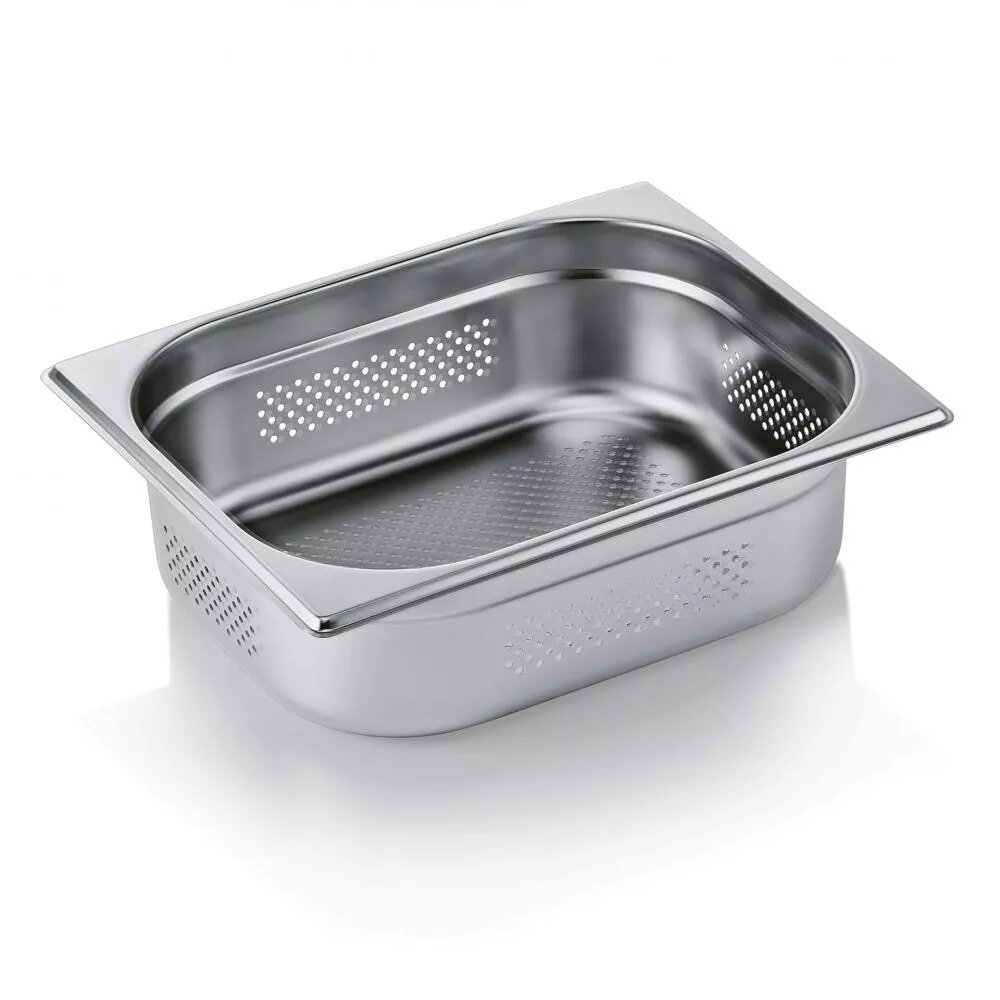
We are comparing the WAS GN 1/2 Perforated Tray 100mm with several alternative gastronorm containers from the brand WAS. All these items are designed for professional kitchens, catering, and restaurants, but they differ in perforation type, GN size standard, depth, and material. The main practical differences lie in capacity, liquid drainage and air circulation capabilities, and compatibility with specific storage and cooking workflows.
⚙️ The specifications comparison below covers parameters such as the GN size standard, container depth, perforation, and material to help you evaluate their suitability for specific kitchen tasks.
| Parameter | WAS GN 1/2 Perforated Tray 100mm | Perforated GN 1/2 stainless steel tray WAS, usable depth 150 mm | Gastronorm perforated tray WAS DE1237111100 — GN 1/1, 100 mm depth, stainless steel | Food tray WAS GN 1/2 DE1237012040 — depth 40 mm, non-thermal gastronorm insert | Stainless steel gastronorm container WAS GN 1/2 DE1237012100, depth 100 mm | GN 1/2 Container WAS DE1238412150 150 mm polypropylene (PP) | Practical significance of differences |
|---|
| GN size standard | GN 1/2 | GN 1/2 | GN 1/1 | GN 1/2 | GN 1/2 | GN 1/2 | Most models use the GN 1/2 standard for compatibility with matching equipment, whereas the GN 1/1 model requires twice the surface footprint. |
| Depth | 100 mm | 150 mm | 100 mm | 40 mm | 100 mm | 150 mm | Depth determines capacity: shallow trays (40 mm) suit portioning and display, medium trays (100 mm) are versatile, and deep trays (150 mm) maximize volume. |
| Perforation | Yes | Yes | Yes | No (solid container) | No (solid container) | No (solid container) | Perforated trays enable drainage and airflow for steaming and cooling, while solid containers retain liquids and sauces. |
| Material | Stainless steel | Stainless steel | Stainless steel | Stainless steel | Stainless steel | Polypropylene (PP) | Stainless steel handles high heat and intensive use, whereas polypropylene offers lighter weight for transportation. |
◎ The use cases comparison below will help you determine which option best fits your daily food preparation, storage, and presentation needs.
| Use case | Recommended product | Why |
|---|
| Steaming and food draining within a GN 1/2 system for moderate quantities | WAS GN 1/2 Perforated Tray 100mm | The 100 mm depth and perforation are optimal for liquid drainage and airflow with medium-sized food portions. |
| Steaming and processing larger batches of ingredients | Perforated GN 1/2 stainless steel tray WAS, usable depth 150 mm | The increased depth of 150 mm accommodates a larger food volume while maintaining the benefits of perforation. |
| Large-scale prep work and ingredient storage in a GN 1/1 footprint | Gastronorm perforated tray WAS DE1237111100 — GN 1/1, 100 mm depth, stainless steel | The wider GN 1/1 surface area provides expanded capacity for high-volume professional kitchen workflows. |
| Shallow portioning, ingredient staging, and buffet display | Food tray WAS GN 1/2 DE1237012040 — depth 40 mm, non-thermal gastronorm insert | The shallow 40 mm depth allows easy access to ingredients and neat presentation of prepared dishes. |
| Storing and marinating foods with liquids in a GN 1/2 format | Stainless steel gastronorm container WAS GN 1/2 DE1237012100, depth 100 mm | The lack of perforation retains liquids and moisture inside the container at the same 100 mm depth. |
| Lightweight food transport and storage with high capacity | GN 1/2 Container WAS DE1238412150 150 mm polypropylene (PP) | Plastic material reduces weight during transport, and the 150 mm depth delivers high storage volume. |
Choose the WAS GN 1/2 Perforated Tray 100mm if you need a versatile, medium-depth GN 1/2 perforated container for professional steaming, draining, and food prep. It offers an optimal balance of capacity and functionality for standard kitchen workflows, unlike deeper, solid, or plastic alternatives.