Dreame vacuums for fast and efficient cleaning!

{{ totalProductsCount }}
In cart {{totalProductsCount}} item(s)
In cart {{totalProductsCount}} item(s)
Total:
{{sum | formatAmount}}
Your cart is empty
Delta 3D printeris | 3D Printers
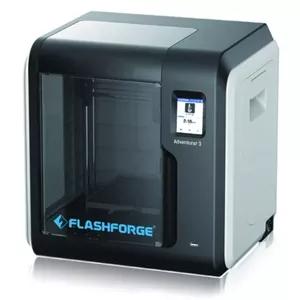
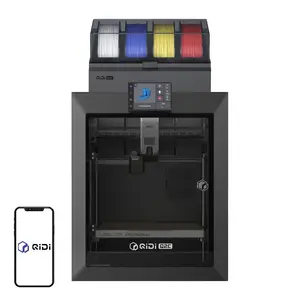
QiDi
3D Printer QiDi Q2C Combo — QiDi Q2C Combo model, Combo dual-function 3D printer
Delivery: 04.08.2026
591.99 €

3MK
3D printer 3MK Starter Kit All-Safe 3.0 (model 3M002984) — starter kit for desktop 3D printing
Delivery: 04.08.2026
1,081.49 €
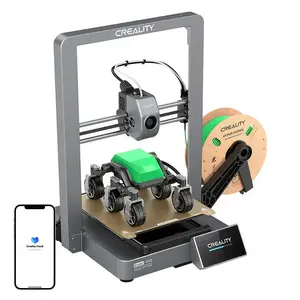
Fast delivery available
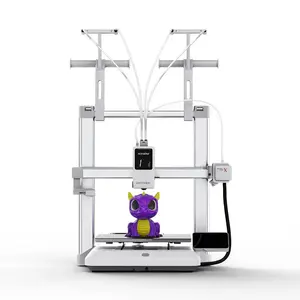
AnyCubic
Anycubic Kobra 3 V2 Combo FDM 3D Printer with Multi-Material Support
Delivery: 04.08.2026
330.49 €
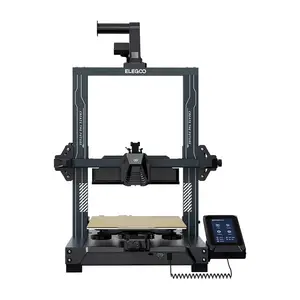
Elegoo
3D printer Elegoo Neptune 4 Pro with Dual Z-axis and silent stepper drivers
Delivery: 04.08.2026
215.99 €
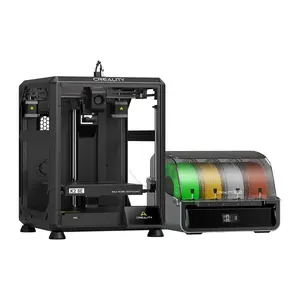
Creality
3D Printer Creality K2 SE Combo – Creality K2 SE Combo 3D Printer
Delivery: 04.08.2026
489.99 €
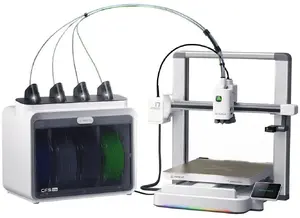
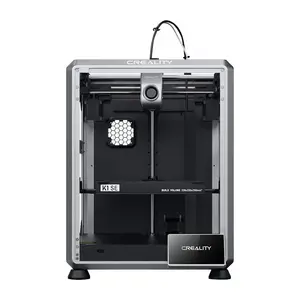
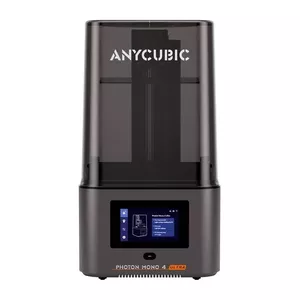
AnyCubic
3D Printer AnyCubic Photon Mono 4 Ultra PM4U-IP-O 4K resolution
Delivery: 04.08.2026
247.49 €
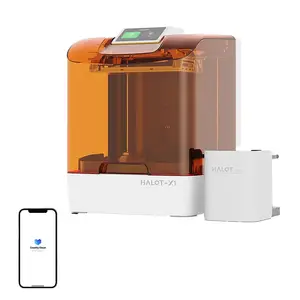
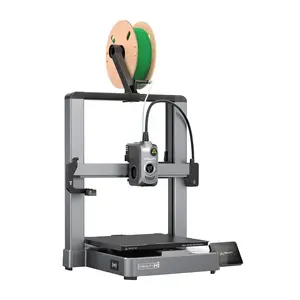
Creality
3D Printer Creality Hi 1001010510 FDM Build Volume 220×220×250 mm
Delivery: 04.08.2026
218.49 €
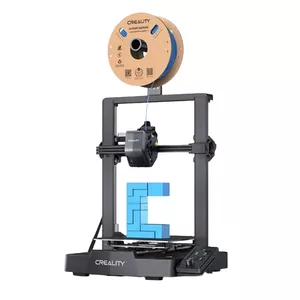
Creality
3D printer Creality Ender-3 V3 SE FDM PETG PLA TPU 0.1-0.35mm
Delivery: 04.08.2026
183.49 €
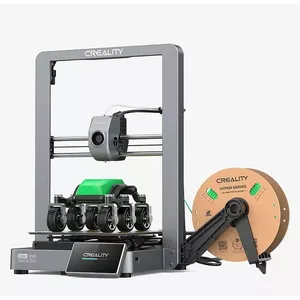
Creality
3D printer Creality Ender-3 V3 FDM build volume 220×220×250 mm
Delivery: 04.08.2026
278.49 €
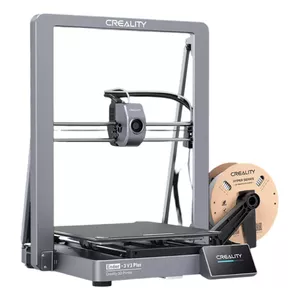
Creality
3D printer Creality ENDER-3 V3 PLUS FDM Wi-Fi ABS PETG 0.1-0.35mm
Delivery: 04.08.2026
344.99 €
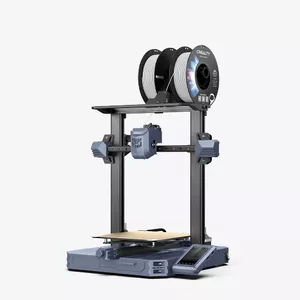
Creality
3D printer Creality CR-10 SE — Creality CR-10SE large build volume, easy assembly
Delivery: 04.08.2026
190.49 €
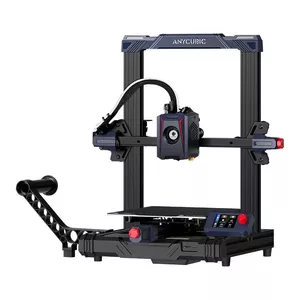
AnyCubic
3D printer AnyCubic KOBRA 2 NEO FDM — build volume 256×256×260 mm
Delivery: 04.08.2026
166.99 €
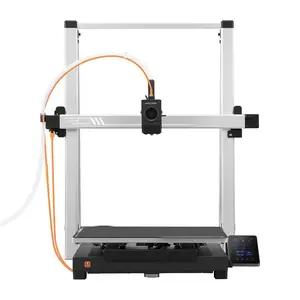
AnyCubic
FDM 3D Printer AnyCubic Kobra 3 Max — Large Build Volume 300×300×350 mm
Delivery: 04.08.2026
420.99 €
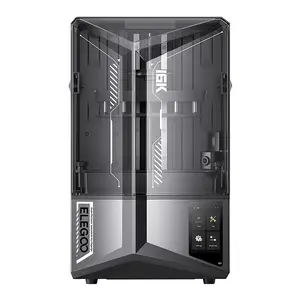
Elegoo
3D printer Elegoo Saturn 4 Ultra — high-resolution 16K, large build volume
Delivery: 04.08.2026
440.49 €

AnyCubic
Resin 3D Printer AnyCubic Photon Mono 4 PM40BK0A-O — 4K monochrome LCD, desktop
Delivery: 04.08.2026
165.49 €
3D printers are machines that create three-dimensional objects by depositing material layer by layer according to digital models. These devices are used in settings ranging from hobby workshops and educational labs to product development studios and small-scale manufacturing, chosen for their ability to produce rapid prototypes, custom parts, and one-off items without traditional tooling. Typical materials include thermoplastics, resins, and composite filaments; some models also work with metal powders or specialized polymers for industrial use. Users select 3D printers when they need fast iteration, geometric complexity, or low-volume production that would be costly or slow with subtractive methods. Understanding build volume, material compatibility, and required post-processing helps determine if a 3D printer fits a particular application.
Types of 3D Printers
Common categories of 3D printers differ by printing technology and intended use:
- Fused Deposition Modeling (FDM) — melts and extrudes filament to build layers; widely used for prototyping and hobby projects.
- Stereolithography (SLA) and Digital Light Processing (DLP) — cure liquid resin with light to produce high-detail parts; used for jewelry, dental models, and detailed prototypes.
- Selective Laser Sintering (SLS) — sinters powdered material, typically nylon, allowing complex geometries without support structures; common in industrial applications.
- Material Jetting and Binder Jetting — deposit droplets or bind powder for multi-material or full-color parts in specialized workflows.
- Metal 3D printers — use powder bed fusion or directed energy deposition for metal parts in aerospace, automotive, and tooling contexts.
What are 3D Printers used for?
3D printers serve multiple practical purposes across industries and hobbies:
- Rapid prototyping — quickly turn CAD designs into physical models for evaluation and testing.
- Custom parts and replacement components — produce tailored or discontinued parts on demand.
- Educational use — teach design, engineering, and manufacturing principles in classrooms and labs.
- Small-batch manufacturing — create limited runs of functional parts without injection molds.
- Medical models and devices — produce anatomical models, surgical guides, and some patient-specific devices when compliant with regulations.
Key Differences between 3D Printers
Important factors that separate 3D printers include:
- Printing technology — affects surface finish, dimensional accuracy, speed, and material options.
- Build volume — determines the maximum part size or whether assemblies are needed.
- Material compatibility — not all printers handle the same plastics, resins, composites, or metals.
- Resolution and accuracy — influence detail level and fit for functional parts.
- Reliability and maintenance — frequency of calibration, part replacement, and required user skill vary by model.
How to Choose 3D Printers?
Selecting a suitable 3D printer involves assessing project requirements and practical constraints:
- Define intended use — prototype detail, functional parts, education, or production influences technology choice.
- Check compatible materials — ensure the printer supports the polymers, resins, or metals required for your applications.
- Consider build volume and resolution — match printer size and accuracy to the largest part and the smallest feature you need.
- Evaluate workflow and software — look for supported file formats, slicer options, and post-processing steps.
- Factor in operating costs and maintenance — include material costs, consumables, and expected downtime in planning.
Why is it worth buying 3d printers at AiO.lv?
At the AiO.lv online store, you can place an order at a great price with delivery across Latvia — to Riga, Daugavpils, Liepaja, Jurmala, Ventspils, and other cities, as well as throughout Europe. We offer products from leading manufacturers: GEMBIRD, TRACER, 3DOODLER, Flashforge, 3MK, Lamax, devil design, Creality, snapmaker, LaserPecker, xTool, AnyCubic, Elegoo, BambuLab, Prusa, Sunlu, Phrozen, Sygnis, Longer, WONDERMAKER. When you shop with us, you get:
- official warranty and guaranteed quality;
- convenient payment options (including installment and credit);
- fast and reliable delivery across Latvia and to any EU country.
FAQ
Where can you find a 3d printers with cheap prices?
You can buy cheaper at the AiO.lv online store. We offer competitive prices and regular discounts, so you always have the chance to find a great deal.
What is the delivery time for 3d printers?
If you place your order today, delivery will take between 1 and 5 business days depending on the chosen method.
How long is the warranty period for 3d printers?
Our store provides an official manufacturer’s warranty ranging from 12 to 36 months, depending on the model and brand. If needed, you can always contact our customer service department or the manufacturer’s authorized service center for support.
Are 3d printers purchasable with leasing?
Yes, if the selected product costs more than €50. You can learn more about installment purchase options and the terms of application on the Payment page.
Can 3d printers be purchased for a company (with VAT)?
Yes. AiO.lv works with legal entities in Latvia and throughout Europe. All product prices are shown with VAT included. In certain cases, a 0% VAT rate may apply — for example, when purchasing from other EU countries with a valid VAT number. We issue an invoice immediately after the order is placed, support BIS electronic invoices, and automatically generate all required accounting documents. To complete a purchase for a company, simply select the company profile during checkout.


