Powerful EcoFlow stations for energy anywhere!

{{ totalProductsCount }}
In cart {{totalProductsCount}} item(s)
In cart {{totalProductsCount}} item(s)
Total:
{{sum | formatAmount}}
Your cart is empty
3D scanners
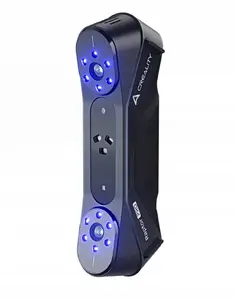
Creality
3D scanner Creality CR-Scan Raptor Pro — handheld 3D scanner, Creality model CR-Scan Raptor Pro
Delivery: 30.10.2026
1,659.49 €
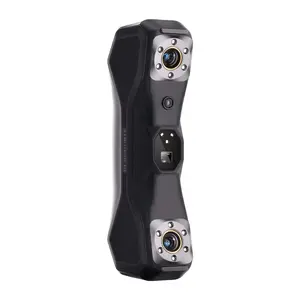
Revopoint
3D Scanner Revopoint MetroX Pro Advanced - Revopoint METROX-PRO-ADVANCED
Delivery: 30.10.2026
1,224.99 €
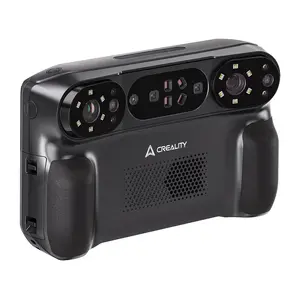
Creality
3D scanner Creality Sermoon P1 — desktop 3D scanning device
Delivery: 30.10.2026
3,205.49 €
Revopoint
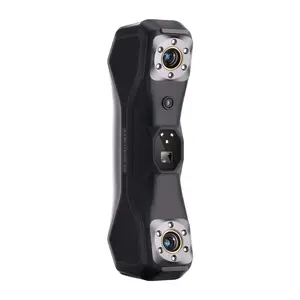
3D Scanner Revopoint MetroX Pro Standard - Revopoint METROX-PRO-STANDARD
Delivery: 30.10.2026
1,063.49 €
Excellent choice
Revopoint
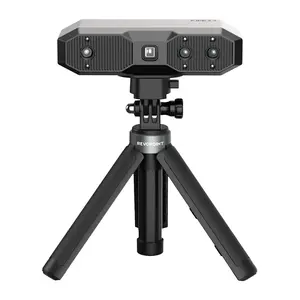
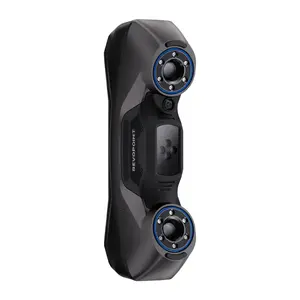
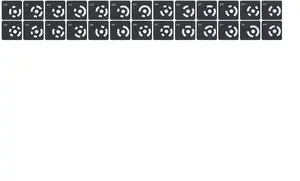
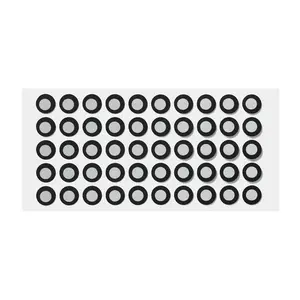
Self-Adhesive Markers Revopoint (208 pcs) – coded sticky targets for 3D scanning and photogrammetry
Delivery: 30.10.2026
23.49 €
Revopoint
Revopoint Scanning Marker Set – 500 pcs – registration markers for 3D scanning
Delivery: 30.10.2026
23.49 €
Revopoint
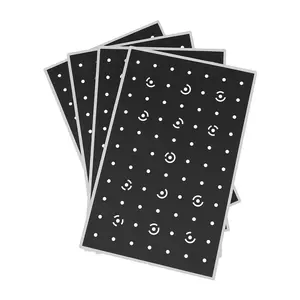
Revopoint Magnetic Markers 208 pcs. — magnetic reference targets for 3D scanning and photogrammetry
Delivery: 30.10.2026
52.49 €
Revopoint
Calibration Plate Revopoint HPCCB — High-Precision Encoded Calibration Plate for 3D Scanners
Delivery: 30.10.2026
67.49 €
Revopoint
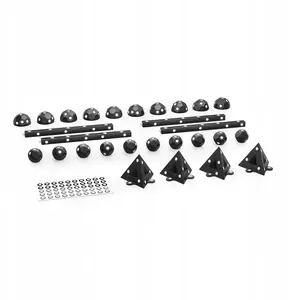
Reference Block Set Revopoint MARKER-BLOCK-KIT — alignment and calibration markers for 3D scanners
Delivery: 30.10.2026
232.49 €
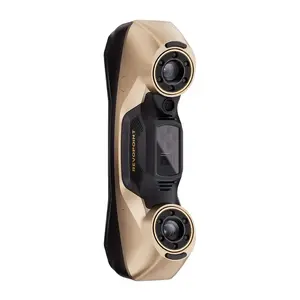
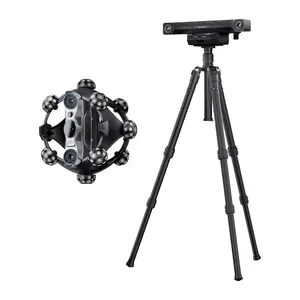
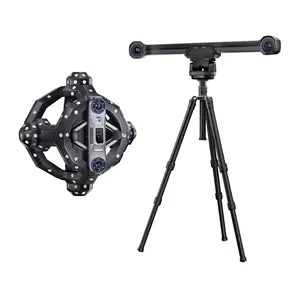
Revopoint
3D scanner Revopoint TRACKIT optical high precision portable
Delivery: 30.10.2026
4,707.49 €
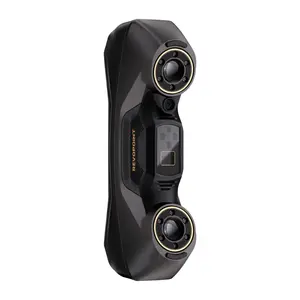
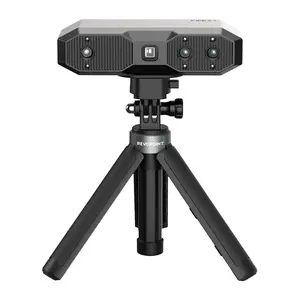
3D scanners are devices that capture the shape, size and surface details of physical objects and convert that information into digital 3D models or point cloud data. These scanners use optical, laser, structured light or contact-based measurement methods to record geometry and texture, allowing accurate reproduction of parts, prototypes, artifacts and environments. Professionals choose 3D scanners for tasks that require precise dimensional data, reverse engineering, quality inspection, digital archiving, and rapid prototyping. Models vary in portability, resolution, scanning speed and required post-processing, so selecting a scanner depends on the object size, material properties and the intended output format. 3D scanners are often paired with software for alignment, mesh generation and measurement to produce usable CAD files or printable models.
Types of 3D scanners
The main 3D scanning technologies differ by how they record surface geometry and texture.
- Laser triangulation scanners: use a laser line and camera to calculate accurate coordinates; suitable for small to medium objects and inspection tasks.
- Structured light scanners: project coded light patterns and compute 3D shape from distortions; commonly used for fast capture of complex surfaces.
- Photogrammetry-based systems: create 3D models from multiple photographs using image matching; useful for large scenes and textured objects.
- Time-of-flight and LiDAR scanners: measure distance using light pulse timing; effective for large-scale scanning of environments and architecture.
- Contact (probing) scanners: obtain geometry by physically touching the surface with a probe; often integrated with coordinate measuring machines (CMMs) for high-accuracy metrology.
What are 3D scanners used for?
3D scanners provide digital representations that support measurement, analysis and manufacturing workflows.
- Reverse engineering: capture existing parts to recreate CAD models or modify designs.
- Quality control and inspection: compare scanned data to CAD models to detect deviations and measure tolerances.
- Product design and prototyping: convert physical prototypes into editable digital files for iteration and 3D printing.
- Cultural heritage and digital archiving: document artifacts, sculptures and sites with accurate 3D records.
- Architecture, construction and surveying: record building interiors, facades and terrain for planning and visualization.
- Medical and dental applications: create models for prosthetics, orthotics, dental restorations and surgical planning.
Key Differences between 3D scanners
Comparing scanners focuses on performance metrics and practical constraints that affect results.
- Accuracy and resolution: specify the smallest measurable detail and the deviation from true dimensions; higher accuracy is required for metrology and inspection.
- Scan volume and range: the maximum object size or working distance that the scanner can capture effectively.
- Speed and data throughput: how quickly a scanner captures frames or points, which affects workflow and post-processing time.
- Surface compatibility: some scanners perform poorly on reflective, transparent or dark surfaces without preparation or special settings.
- Portability and setup: handheld and mobile units offer flexibility, while stationary or CMM-mounted systems provide stable conditions for higher precision.
- Software ecosystem and output formats: available tools for alignment, meshing and export determine how easily scanned data integrates with CAD, inspection or 3D printing workflows.
How to Choose 3D scanners?
Selecting a 3D scanner requires matching technical capabilities to your application and workflow needs.
- Define the primary use: determine whether you need metrology-grade accuracy, rapid surface capture, large-volume scanning, or detailed texture capture.
- Check accuracy and resolution specifications: choose a device whose stated performance meets measurement tolerances for your tasks.
- Consider object size and working distance: ensure the scanner’s scan volume and range accommodate the typical objects you will capture.
- Evaluate surface handling and preparation: verify whether the scanner can handle reflective, transparent or dark materials or if surface treatment is required.
- Assess portability and ease of use: decide between handheld convenience and fixed setups depending on site conditions and operator skill.
- Confirm software and file compatibility: ensure the scanner exports formats compatible with your CAD, inspection or 3D printing tools and provides necessary processing features.
- Budget and total cost of ownership: include not only device price but also software licenses, training, accessories and maintenance when comparing options.
Why is it worth buying 3d scanners at AiO.lv?
At the AiO.lv online store, you can place an order at a great price with delivery across Latvia — to Riga, Daugavpils, Liepaja, Jurmala, Ventspils, and other cities, as well as throughout Europe. We offer products from leading manufacturers: Creality, Revopoint. When you shop with us, you get:
- official warranty and guaranteed quality;
- convenient payment options (including installment and credit);
- fast and reliable delivery across Latvia and to any EU country.
FAQ
Where can you find a 3d scanners with cheap prices?
You can buy cheaper at the AiO.lv online store. We offer competitive prices and regular discounts, so you always have the chance to find a great deal.
What is the delivery time for 3d scanners?
If you place your order today, delivery will take between 1 and 5 business days depending on the chosen method.
How long is the warranty period for 3d scanners?
Our store provides an official manufacturer’s warranty ranging from 12 to 36 months, depending on the model and brand. If needed, you can always contact our customer service department or the manufacturer’s authorized service center for support.
Are 3d scanners purchasable with leasing?
Yes, if the selected product costs more than €50. You can learn more about installment purchase options and the terms of application on the Payment page.
Can 3d scanners be purchased for a company (with VAT)?
Yes. AiO.lv works with legal entities in Latvia and throughout Europe. All product prices are shown with VAT included. In certain cases, a 0% VAT rate may apply — for example, when purchasing from other EU countries with a valid VAT number. We issue an invoice immediately after the order is placed, support BIS electronic invoices, and automatically generate all required accounting documents. To complete a purchase for a company, simply select the company profile during checkout.


