Save time and money with our discounts!

{{ totalProductsCount }}
In cart {{totalProductsCount}} item(s)
In cart {{totalProductsCount}} item(s)
Total:
{{sum | formatAmount}}
Your cart is empty
Axes - New arrivals
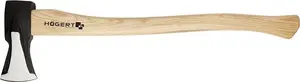
Axes are handheld cutting tools consisting of a head with a sharp blade mounted on a handle, designed for chopping, splitting, carving, and felling wood. They vary by blade shape, weight, and handle length to suit different tasks such as firewood preparation, tree felling, woodworking, and general outdoor use. Users choose axes when a durable, mechanical cutting tool is required for controlled impact cutting or splitting of timber that cannot be accomplished efficiently with saws or knives. Selection often depends on the type of wood, working position, and desired precision versus power. Proper use and maintenance—secure head attachment, correct grip, and periodic sharpening—affect performance and safety. Accessories like sheaths, replacement handles, and wedges extend tool life and adapt axes to specific jobs.
Types of Axes
Common categories of axes are organized by function and design.
- Felling axes: long-handled with a thin, sharp blade for cutting across grain and felling trees.
- Splitting axes and mauls: heavier heads and wedge-shaped blades for splitting logs along the grain.
- Hatchets: short-handled, lighter axes for one-handed use, camping, and small woodworking tasks.
- Carving and shaping axes: smaller, finely edged tools for shaping wood and detailed work.
- Broad axes and hewing axes: wide blades used in timber framing and shaping beams.
- Specialty axes: includes tactical, throwing, and trade-specific designs (e.g., logger’s axes) for particular uses.
What are Axes used for?
Axes are used for a range of cutting and shaping tasks involving wood and similar materials.
- Felling and limbing trees: cutting through trunks and removing branches.
- Splitting firewood: separating logs into smaller pieces for fuel.
- Wood shaping and joinery: removing material for beams, planks, and carved elements.
- Camping and bushcraft: preparing kindling, building shelters, and general camp tasks.
- Emergency and tactical uses: breaching, clearing, or rescue in specific professional contexts.
Key Differences between Axes
Axes differ by design features that influence performance, control, and suitability for tasks.
- Blade geometry: thin, sharp blades cut efficiently for felling; thick, wedge-shaped blades split wood more effectively.
- Head weight: heavier heads deliver greater impact and splitting force; lighter heads allow faster, more controlled swings.
- Handle length and material: long handles increase leverage and reach; short handles improve maneuverability. Handles can be wood, fiberglass, or composite, each with different shock absorption and durability.
- Balance and center of gravity: determines swing dynamics and user fatigue over extended work.
- Edge angle and hardness: steeper angles resist dulling during heavy work; harder steel holds an edge longer but may be more brittle.
How to Choose Axes?
Selecting an axe requires matching tool characteristics to the intended tasks and user capability.
- Define primary use: choose felling axes for cutting across grain, splitting axes for splitting logs, and hatchets for light or one-handed work.
- Consider head weight and handle length: heavier heads and longer handles for heavy outdoor work; lighter, shorter tools for portability and precision.
- Check handle material and ergonomics: choose durable materials with good grip and shock absorption suited to your preferred swing style.
- Evaluate blade steel and edge geometry: select a balance between edge retention and toughness based on expected wood species and frequency of use.
- Inspect construction and safety features: secure head-to-handle fit, protective sheaths, and options for replacing handles or heads if needed.
- Maintenance requirements: ensure you can sharpen, store, and periodically inspect the axe to maintain safe operation.
Which axes - new arrivals are the most popular and affordable in 2026?
The full list of popular models at affordable prices is available on this page. In 2026, the following models show high demand and an excellent price-to-quality ratio:
- GTV HT3B069 2kg Wood Splitting Axe with Wooden Handle for 30.49€
- Hand axe Fiskars Universal AX N10 1051143 — lightweight durable design, model 1051143 for 62.99€
Why is it worth buying axes - new arrivals at AiO.lv?
At the AiO.lv online store, you can place an order at a great price with delivery across Latvia — to Riga, Daugavpils, Liepaja, Jurmala, Ventspils, and other cities, as well as throughout Europe. We offer products from leading manufacturers: 3M, OEM, BLAUPUNKT, FORTE, GTV, Fiskars, Gerber, DeWalt, STIHL, Mentor, RAMPAGE, Morakniv, Cellfast, Topex, YATO, BRADAS, GARDENA, STANLEY, BAHCO, Gedore. When you shop with us, you get:
- official warranty and guaranteed quality;
- convenient payment options (including installment and credit);
- fast and reliable delivery across Latvia and to any EU country.
FAQ
Where can you find a axes - new arrivals with cheap prices?
You can buy cheaper at the AiO.lv online store. We offer competitive prices and regular discounts, so you always have the chance to find a great deal.
What is the delivery time for axes - new arrivals?
If you place your order today, delivery will take between 1 and 5 business days depending on the chosen method.
How long is the warranty period for axes - new arrivals?
Our store provides an official manufacturer’s warranty ranging from 12 to 36 months, depending on the model and brand. If needed, you can always contact our customer service department or the manufacturer’s authorized service center for support.
Are axes - new arrivals purchasable with leasing?
Yes, if the selected product costs more than €50. You can learn more about installment purchase options and the terms of application on the Payment page.
Can axes - new arrivals be purchased for a company (with VAT)?
Yes. AiO.lv works with legal entities in Latvia and throughout Europe. All product prices are shown with VAT included. In certain cases, a 0% VAT rate may apply — for example, when purchasing from other EU countries with a valid VAT number. We issue an invoice immediately after the order is placed, support BIS electronic invoices, and automatically generate all required accounting documents. To complete a purchase for a company, simply select the company profile during checkout.


