A curated selection of maximum value offers!

{{ totalProductsCount }}
In cart {{totalProductsCount}} item(s)
In cart {{totalProductsCount}} item(s)
Total:
{{sum | formatAmount}}
Your cart is empty
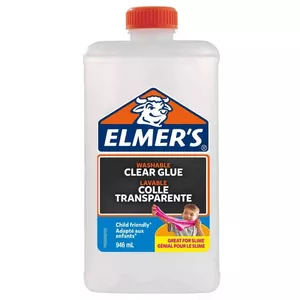
Glue
Get it Today
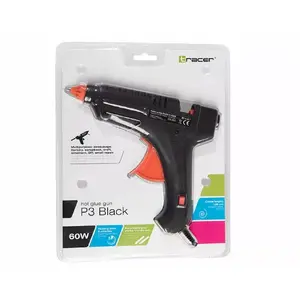
Excellent choice
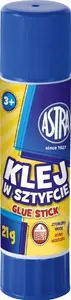

Centrum
Glue stick Centrum LITE 36 g — Centrum 200-05469, 36g solid adhesive for paper and crafts
Delivery: 23.10.2026
2.49 €
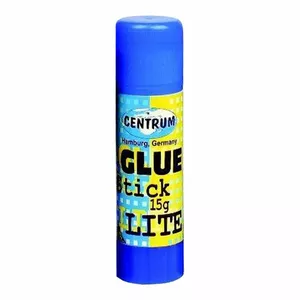
Centrum
Glue Centrum LITE 15 g, liquid adhesive for paper and light materials
Delivery: 23.10.2026
2.49 €
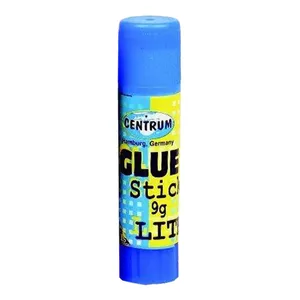
Centrum
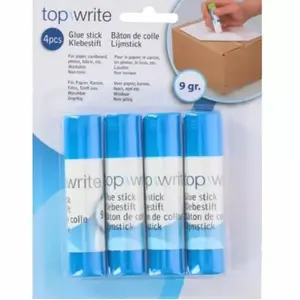
Glue stick Centrum LITE 9 g — Centrum adhesive stick 9g for paper and craft use
Delivery: 23.10.2026
2.49 €
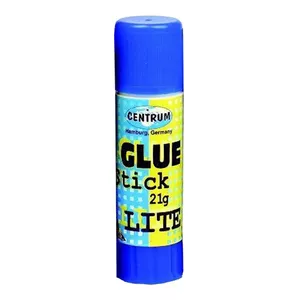
Centrum
Glue stick Centrum LITE 21 g — Centrum 200-05608, 21g solid adhesive for paper and crafts
Delivery: 23.10.2026
2.49 €
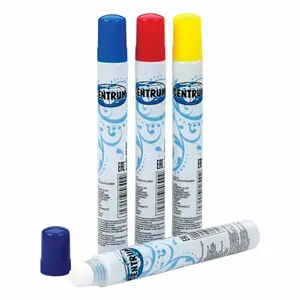
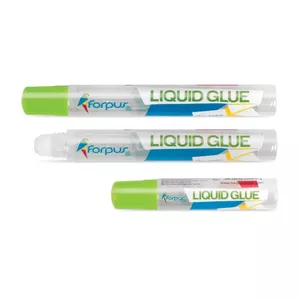
FORPUS
Liquid glue FORPUS FO60404 30 ml — precision adhesive for paper, crafts and school use
Delivery: 23.10.2026
2.49 €
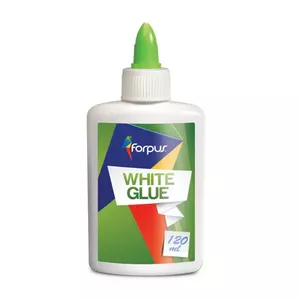
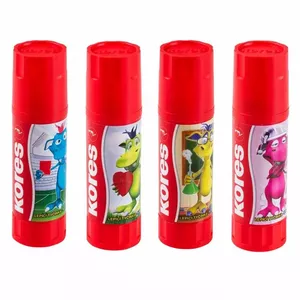
KORES
Glue stick KORES Kastor 15 g – adhesive stick for paper and cardboard, portable 15g
Delivery: 23.10.2026
2.99 €
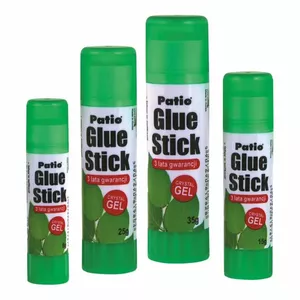
PATIO
Glue PATIO Adhesive PATIO CRYSTAL 8 g 200-09040 — clear instant adhesive, 8 g
Delivery: 23.10.2026
2.99 €
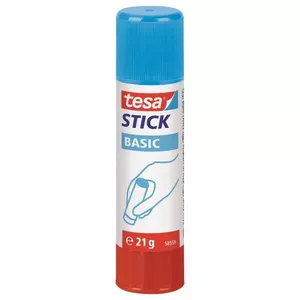
colorino
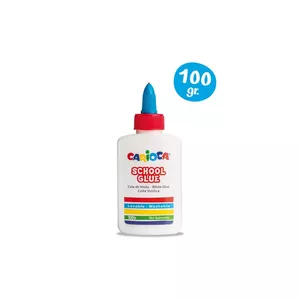
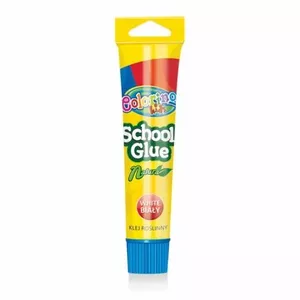
Glue tube Colorino Kids 50 g model 57356PTR for school and crafts
Delivery: 23.10.2026
2.99 €
Centrum
Liquid adhesive Centrum 82746 PVA 60 g — white PVA glue for paper, cardboard and light crafts
Delivery: Thursday
2.99 €
Glue refers to a range of adhesive products formulated to join materials by bonding their surfaces. These products include liquids, gels, tapes, and pastes designed to create mechanical, chemical, or physical bonds between substrates such as wood, metal, plastic, glass, paper, fabric and composites. Glues are used in repair, assembly, crafts, construction, and industrial processes where a permanent or temporary bond is needed. Selection depends on factors like substrate compatibility, strength requirements, cure time, flexibility, temperature and moisture resistance. Proper surface preparation and following manufacturer instructions affect bond quality and durability. Safety measures, such as ventilation and protective equipment, are important when using solvent-based or reactive adhesives.
Types of Glue
Common categories of glue cover a variety of chemistries and forms, each suited to specific materials and applications.
- PVA (polyvinyl acetate) — water-based white glue for wood, paper and general crafts.
- Epoxy — two-part adhesives that cure to a hard, high-strength bond for metal, stone and composites.
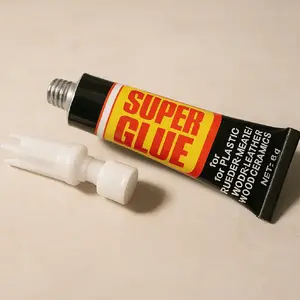
- Cyanacrylate (super glue) — fast-setting adhesives for small parts and non-porous surfaces.
- Contact adhesives — solvent-based or neoprene types applied to both surfaces and bonded on contact, used for laminates and veneers.
- Polyurethane — moisture-curing adhesives offering strong, flexible bonds and gap-filling properties.
- Hot-melt (thermoplastic) — solid sticks melted and applied with a glue gun for quick-set bonds on varied materials.
- Silicone and sealant-adhesives — flexible, weather-resistant options for glass, metal and seals.
- Spray adhesives and aerosol glues — provide even coverage for textiles, foam and lightweight laminates.
What are Glue used for?
Glue products serve multiple practical uses across domestic, professional and industrial contexts.
- Assembly — bonding manufactured parts in woodworking, furniture making and product assembly.
- Repair — fixing broken items such as ceramics, toys, footwear and household objects.
- Crafts and hobbies — model building, paper crafts, fabric projects and decorative work.
- Construction and finishing — installing trim, laminates, flooring and panels.
- Sealing and gasketing — combining adhesive and sealing functions for joints and weatherproofing.
- Electrical and electronic applications — adhesives formulated for potting, component bonding and insulation (use specialized products).
Key Differences between Glue
Differences among adhesives arise from chemistry, performance properties and application methods.
- Curing mechanism — some adhesives cure by solvent evaporation, others by chemical reaction (two-part) or moisture activation.
- Strength and stiffness — epoxies and structural polyurethanes provide high shear and tensile strength; PVA and hot-melt are lower-strength options.
- Flexibility — silicone and certain polyurethanes remain flexible after curing; rigid adhesives may crack under movement.
- Open time and set time — fast-setting glues (cyanoacrylates) set quickly but allow little repositioning; contact and PVA offer longer working times.
- Environmental resistance — some adhesives resist water, heat, UV and chemicals better than others; selection should match exposure conditions.
- Substrate compatibility — not all glues adhere well to plastics, metals or oily surfaces; primers or specific formulations may be required.
How to Choose Glue?
Selecting the right adhesive requires matching product properties to the job requirements and materials.
- Identify substrates — choose a glue formulated for the materials you are bonding (wood, plastic, metal, glass, fabric).
- Determine required strength and flexibility — consider load, impact and movement at the joint.
- Consider working time and cure speed — pick a product that allows necessary positioning or fast setting as needed.
- Check environmental resistance — select adhesives rated for moisture, temperature and chemical exposure of the application.
- Assess application method — choose between brush-on, cartridge, gun, spray or stick based on access and precision needs.
- Follow safety and storage instructions — review ventilation, protective equipment and shelf life to ensure safe and effective use.
Which glue are the most popular and affordable in 2026?
The full list of popular models at affordable prices is available on this page. In 2026, the following models show high demand and an excellent price-to-quality ratio:
- Super glue BLACKMOON 106526 – universal adhesive, 3 g tube for 2.49€
- Astra Glue Stick 21g AS401113004 for 4.99€
- Koh I Nor Medium Pouring Medium 500 ml for Acrylic Painting for 14.99€
Why is it worth buying glue at AiO.lv?
At the AiO.lv online store, you can place an order at a great price with delivery across Latvia — to Riga, Daugavpils, Liepaja, Jurmala, Ventspils, and other cities, as well as throughout Europe. We offer products from leading manufacturers: 3M, HAMA, HP, GIGABYTE, LOGILINK, Bosch, TEKA, DELI, K2, Titanum, HERLITZ, TRACER, BIC, Scotch, Tesa, FORPUS, Grand, INNE, INTERDRUK, Dremel. When you shop with us, you get:
- official warranty and guaranteed quality;
- convenient payment options (including installment and credit);
- fast and reliable delivery across Latvia and to any EU country.
FAQ
Where can you find a glue with cheap prices?
You can buy cheaper at the AiO.lv online store. We offer competitive prices and regular discounts, so you always have the chance to find a great deal.
What is the delivery time for glue?
If you place your order today, delivery will take between 1 and 5 business days depending on the chosen method.
How long is the warranty period for glue?
Our store provides an official manufacturer’s warranty ranging from 12 to 36 months, depending on the model and brand. If needed, you can always contact our customer service department or the manufacturer’s authorized service center for support.
Are glue purchasable with leasing?
Yes, if the selected product costs more than €50. You can learn more about installment purchase options and the terms of application on the Payment page.
Can glue be purchased for a company (with VAT)?
Yes. AiO.lv works with legal entities in Latvia and throughout Europe. All product prices are shown with VAT included. In certain cases, a 0% VAT rate may apply — for example, when purchasing from other EU countries with a valid VAT number. We issue an invoice immediately after the order is placed, support BIS electronic invoices, and automatically generate all required accounting documents. To complete a purchase for a company, simply select the company profile during checkout.


