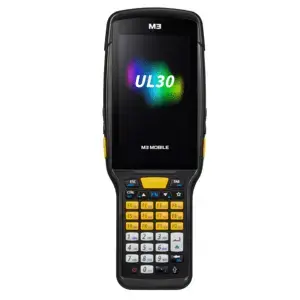
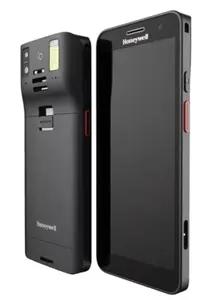
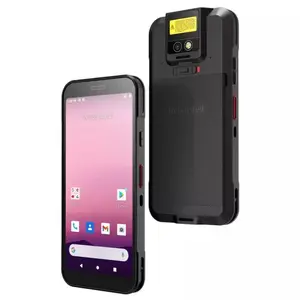
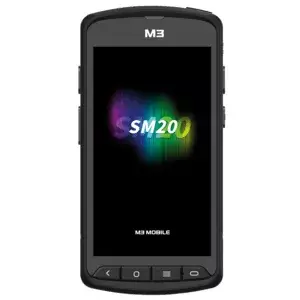
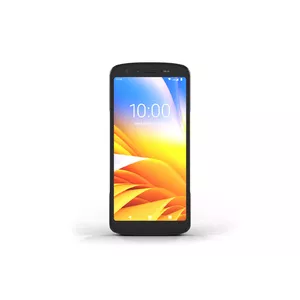
Handheld terminals are compact, portable electronic devices designed to capture, process and transmit data in real time. They combine barcode scanning, data entry, wireless communication and often location or RFID functions, enabling workflow tasks away from fixed workstations. These devices are used in environments such as warehouses, retail floors, field service, logistics and inventory management where mobility, immediate data access and accuracy are required. Handheld terminals vary by durability, input method and connectivity options, and are selected to match operational needs, user ergonomics and integration with back-end systems. Typical choices depend on scan performance, operating system, battery life and environmental resistance to ensure continuous operation in specific work conditions.
Types of Handheld Terminals
Handheld terminals are available in several common types tailored to different tasks.
- Rugged handheld terminals: Built to withstand drops, dust and moisture; used in industrial and outdoor settings.
- Consumer-grade handhelds: Lighter devices for retail or light-duty tasks with focus on cost and ease of use.
- PDA-style terminals: Devices with larger displays and more advanced computing capabilities for complex workflows and mobile applications.
- Scanner-only terminals: Compact units focused on fast barcode capture with minimal additional functionality.
- Mobile computers with integrated printing or RFID: Terminals that combine data capture with on-the-spot label printing or RFID reading/writing.
What are Handheld Terminals used for?
Handheld terminals serve as portable data-capture and communication tools across operational processes.
- Inventory management: Scanning stock, cycle counts and stock transfers to maintain accurate inventory records.
- Order picking and packing: Guiding workers through pick lists and verifying items before shipment.
- Receiving and shipping: Recording incoming goods, updating receipts and printing or confirming labels.
- Price verification and retail operations: Checking prices, updating product information and completing point-of-sale tasks.
- Field service and inspections: Capturing data on site, logging completed tasks and syncing with central systems.
Key Differences between Handheld Terminals
Several technical and physical attributes distinguish handheld terminals and affect suitability for tasks.
- Durability and IP rating: Degree of protection against dust and water and resistance to impact for harsh environments.
- Scanning technology: Laser, linear-imaging or 2D area-imaging scanners differ in speed, range and ability to read damaged or mobile barcodes.
- Operating system and software ecosystem: Choices include Android, Windows Embedded or proprietary OS, which determine app compatibility and management tools.
- Connectivity options: Wi‑Fi, Bluetooth, cellular (3G/4G/5G) and NFC/RFID support affect real-time data exchange and peripheral pairing.
- Battery life and battery type: Removable or fixed batteries, hot-swap capability and total run time influence continuous operation and shift coverage.
- Input and display: Physical keyboards, touchscreens, glove-capable displays and screen size affect speed and ergonomics of data entry.
How to Choose Handheld Terminals?
Selecting an appropriate handheld terminal requires matching device capabilities to operational requirements and constraints.
- Define use cases: List primary tasks (scanning, printing, field data capture) and typical workflows to determine required features.
- Assess environment: Choose ruggedness and IP rating based on exposure to dust, moisture, temperature extremes and drop risk.
- Check scanning and sensor needs: Select scanner type and range suitable for barcode types, label conditions and reading distances.
- Consider software and integration: Confirm operating system compatibility, available development tools and integration with existing backend systems.
- Review connectivity and battery requirements: Ensure reliable network access (Wi‑Fi/cellular) and battery capacity for shift lengths, or provision for hot-swap batteries.
- Evaluate ergonomics and manageability: Test device weight, form factor, input method and device management features such as remote provisioning and security controls.
Why is it worth buying handheld terminals at AiO.lv?
Order online at AiO.lv at a good price, with delivery across Latvia and to other EU countries. We deliver to Riga, Daugavpils, Liepāja, Jūrmala, Ventspils and other cities. We offer products from leading manufacturers.
- Official warranty and proven quality.
- Convenient payment methods, including instalments and credit.
- Fast, reliable delivery across Latvia and to other EU countries.
FAQ
Where can you find a handheld terminals with cheap prices?
You can buy cheaper at the AiO.lv online store. We offer competitive prices and regular discounts, so you always have the chance to find a great deal.
What is the delivery time for handheld terminals?
If you place your order today, delivery will take between 1 and 5 business days depending on the chosen method.
How long is the warranty period for handheld terminals?
Our store provides an official manufacturer’s warranty ranging from 12 to 36 months, depending on the model and brand. If needed, you can always contact our customer service department or the manufacturer’s authorized service center for support.
Are handheld terminals purchasable with leasing?
Yes, if the selected product costs more than €50. You can learn more about installment purchase options and the terms of application on the
Payment page.
Can handheld terminals be purchased for a company (with VAT)?
Yes. AiO.lv works with legal entities in Latvia and throughout Europe. All product prices are shown with VAT included. In certain cases, a 0% VAT rate may apply — for example, when purchasing from other EU countries with a valid VAT number. We issue an invoice immediately after the order is placed, support BIS electronic invoices, and automatically generate all required accounting documents. To complete a purchase for a company, simply select the company profile during checkout.