Powerful EcoFlow stations for energy anywhere!

{{ totalProductsCount }}
In cart {{totalProductsCount}} item(s)
In cart {{totalProductsCount}} item(s)
Total:
{{sum | formatAmount}}
Your cart is empty
Scales
Fast delivery available
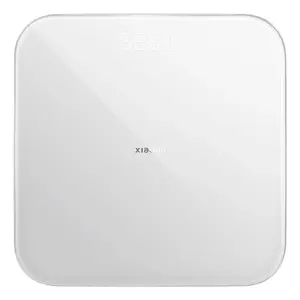
Xiaomi
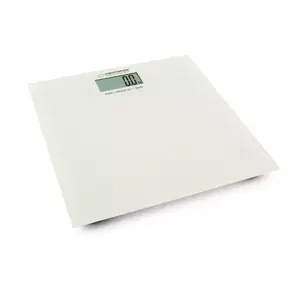
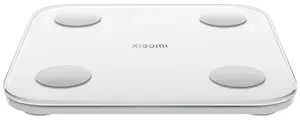
Xiaomi Smart Scale S200 Electronic Personal Scale White with BMI Measurement Maximum Weight 150 kg 50 g Accuracy
Delivery: 26.10.2026
12.99 €
Get it Tomorrow

Excellent choice
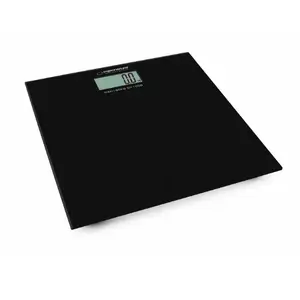
ESPERANZA
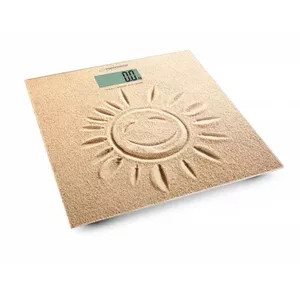
Electronic personal scale ESPERANZA EBS006 — tempered glass, 180 kg capacity, beige, square
Delivery: Thursday
6.49 €
Fast shipping
Excellent choice
Excellent choice
Rosberg
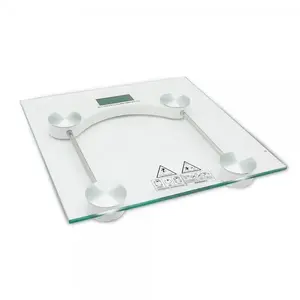
Rosberg 555551650D Bathroom Scale with 4-Digit LCD, 180 kg Capacity, and Tempered Glass Platform
Delivery: 19.10.2026
10.99 €
Fast shipping
Excellent choice

You save: 2.00 €

SENCOR
Sencor SBS 2301WH Electronic Personal Scale White with LCD Display 150 kg Capacity and Auto Power Off
Delivery: 19.10.2026
14.49 €
12.49 €
The discount is valid from 23.09.2026 to 21.10.2026
Fast delivery available
Excellent choice
Fast shipping
You save: 1.00 €
Jata
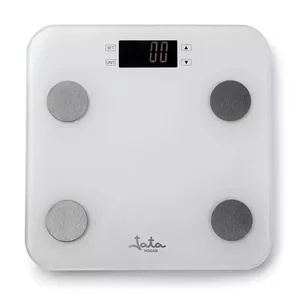
Electronic personal scale JATA HBAS1501
Delivery: Wednesday
17.99 €
16.99 €
The discount is valid from 03.10.2026 to 31.10.2026
Excellent choice
Fast shipping
You save: 12.00 €
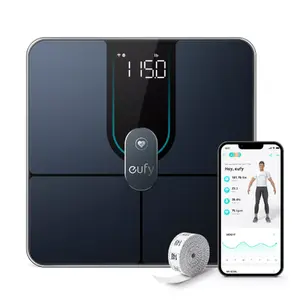
Eufy
Electronic Scale Eufy Smart Scale P2 Pro
Delivery: Wednesday
60.99 €
48.99 €
The discount is valid from 09.10.2026 to 06.11.2026
Fast delivery available
New Arrival
Fast shipping
New Arrival
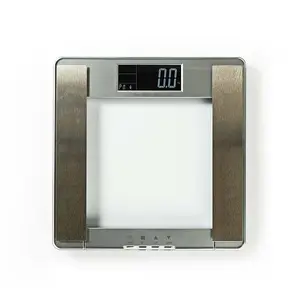
Nedis
Nedis PESC120DCT Electronic Personal Scale Silver with LCD Display 180 kg Capacity and 100 g Accuracy
Delivery: Wednesday
25.49 €
Scales are measuring instruments designed to determine weight, mass or force by balancing or sensing load and converting it into a readable value. They are used in a range of settings from households and kitchens to medical facilities, laboratories and industrial environments where precise or repeatable weight measurement is required. Typical designs include mechanical balance systems and electronic load-cell devices that provide digital readouts and connectivity for data recording. Buyers select scales based on required capacity, resolution, accuracy class and the environmental or regulatory conditions of their application. Proper use and periodic verification help ensure reliable measurements over time.
Types of Scales
Common types of scales include:
- Kitchen scales — compact units for food portioning and recipes with low maximum capacity and fine resolution.
- Bathroom and personal scales — designed for body weight measurement, often with larger platforms and integrated displays.
- Analytical and laboratory balances — high-precision instruments for small masses, typically with draft shields and fine readability.
- Platform and industrial scales — heavy-duty units for pallets, bins or large items with higher capacity and durable construction.
- Hanging and crane scales — suspended load measurement for lifting and material handling applications.
- Postal and parcel scales — optimized for shipping, combining weight measurement with capacity suited to mail and packages.
- Medical scales — devices for clinical use, including wheelchair scales and infant scales with specifications for healthcare settings.
What are Scales used for?
Scales are used to obtain quantitative weight or mass data for control, monitoring, calculation or compliance purposes.
- Domestic tasks such as food preparation, portion control and household weighing.
- Commercial and retail operations including pricing by weight, inventory control and point-of-sale weighing.
- Laboratory measurements where mass data are inputs to experiments, formulations and analytical procedures.
- Industrial processes such as batching, material handling and quality control that require consistent load measurement.
- Medical and healthcare applications for monitoring patient weight, dosing and clinical records.
- Shipping and logistics for determining freight charges, verifying consignments and optimizing loads.
Key Differences between Scales
Scales differ by measurement principle, capacity, resolution and environmental suitability, which determine their appropriate use.
- Measurement principle — mechanical balances use counterweights or springs, while electronic scales use load cells and digital electronics.
- Capacity — ranges from grams or milligrams for analytical balances to several tonnes for industrial platform or crane scales.
- Resolution and accuracy — expressed as readability or division value and accuracy class; higher resolution is required for laboratory work.
- Durability and protection — ingress protection (IP rating), corrosion-resistant materials and robust construction affect suitability for industrial or wet environments.
- Features and connectivity — tare, counting, unit conversion, data output (USB, RS232, Bluetooth) and software integration vary by model.
- Certification and compliance — some applications require legal-for-trade approval, calibration certificates or medical device standards.
How to Choose Scales?
Selecting a scale involves matching technical specifications and features to the intended application and operating conditions.
- Determine required capacity and choose a scale with a maximum load comfortably above typical use to avoid overload.
- Select resolution and accuracy appropriate to the measurement task; use higher-precision models for small masses and laboratory work.
- Consider platform size, mounting or portability needs, and ergonomic factors for frequent use.
- Check durability, IP rating and construction materials when the scale will be exposed to dust, moisture or harsh conditions.
- Verify necessary certifications (legal-for-trade, medical, calibration) for commercial, healthcare or regulatory use.
- Evaluate useful features such as tare, counting, unit conversion and data connectivity for integration with workflows or software.
- Plan for maintenance: calibration intervals, battery or power requirements and availability of service or spare parts.
Which scales are the most popular and affordable in 2026?
The full list of popular models at affordable prices is available on this page. In 2026, the following models show high demand and an excellent price-to-quality ratio:
- Sencor SBS 2301WH Electronic Personal Scale White with LCD Display 150 kg Capacity and Auto Power Off for 12.49€
- Electronic personal scale JATA HBAS1501 for 16.99€
- NOERDEN MINIMI Electronic personal scale White LED display 150 kg capacity 100 g accuracy BMI and BMR measurement for 19.99€
- Nedis PESC120DCT Electronic Personal Scale Silver with LCD Display 180 kg Capacity 100 g Accuracy Auto Power Off for 25.49€
- Kern TGD 50-3C Pocket Scale Weighing Range 50 g Readability 0.001 g Battery-powered Multicolored for 99.49€
Why is it worth buying scales at AiO.lv?
At the AiO.lv online store, you can place an order at a great price with delivery across Latvia — to Riga, Daugavpils, Liepaja, Jurmala, Ventspils, and other cities, as well as throughout Europe. We offer products from leading manufacturers: Lenovo, NOKIA, WENTRONIC, OEM, Tefal, UMAX, ESPERANZA, EMOS, SOEHNLE, ZELMER, BLAUPUNKT, PLATINET, OMEGA, CLATRONIC, HUAWEI, GARMIN, Beurer, DUNLOP, Adler, CHICCO. When you shop with us, you get:
- official warranty and guaranteed quality;
- convenient payment options (including installment and credit);
- fast and reliable delivery across Latvia and to any EU country.
FAQ
Where can you find a scales with cheap prices?
You can buy cheaper at the AiO.lv online store. We offer competitive prices and regular discounts, so you always have the chance to find a great deal.
What is the delivery time for scales?
If you place your order today, delivery will take between 1 and 5 business days depending on the chosen method.
How long is the warranty period for scales?
Our store provides an official manufacturer’s warranty ranging from 12 to 36 months, depending on the model and brand. If needed, you can always contact our customer service department or the manufacturer’s authorized service center for support.
Are scales purchasable with leasing?
Yes, if the selected product costs more than €50. You can learn more about installment purchase options and the terms of application on the Payment page.
Can scales be purchased for a company (with VAT)?
Yes. AiO.lv works with legal entities in Latvia and throughout Europe. All product prices are shown with VAT included. In certain cases, a 0% VAT rate may apply — for example, when purchasing from other EU countries with a valid VAT number. We issue an invoice immediately after the order is placed, support BIS electronic invoices, and automatically generate all required accounting documents. To complete a purchase for a company, simply select the company profile during checkout.


