Save time and money with our discounts!

{{ totalProductsCount }}
In cart {{totalProductsCount}} item(s)
In cart {{totalProductsCount}} item(s)
Total:
{{sum | formatAmount}}
Your cart is empty
Markdown Solar Panels
Fast shipping
New Arrival
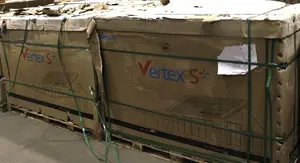
GCL
GCL Solar Panel NT12R48/GDF 455W N-Type Bifacial Dual Glass Monocrystalline 96 Cells IP68 23.27% Efficiency
Delivery: Tuesday
Markdown: Open box
57.49 €
Fast shipping
New Arrival
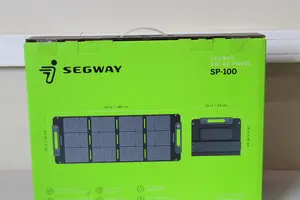
Segway
Segway Solar Panel 100 Solar Panel 100 W 19.8V Type-C USB-A
Delivery: Tuesday
Markdown: Open box
228.49 €
Fast shipping
Open box
Demo
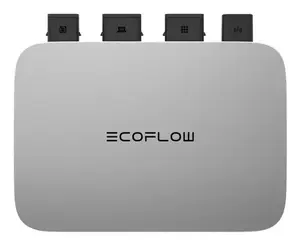
EcoFlow
EcoFlow Powerstream Microinverter 800W, 600W Output, IP67, WiFi
Delivery: 30.10.2026
101.99 €
Fast shipping
Open box
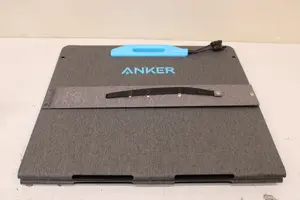
Solar panels are electrical devices that convert sunlight into direct current (DC) electricity using photovoltaic cells. They are installed on roofs, ground mounts, building facades, and portable frames to supply power for residential, commercial, agricultural, and remote applications. People choose solar panels when they need a predictable source of onsite electricity, to reduce dependence on the grid, or to power systems where grid connection is impractical. Typical installations include grid-tied systems with inverters, off-grid arrays with batteries and charge controllers, and hybrid setups combining storage and grid interaction. Performance depends on panel type, orientation, shading, temperature, and local solar irradiance. Proper selection, installation, and system design are necessary to achieve expected energy yield and safe operation.
Types of solar panels
The following lists describe common solar panel types and their main attributes.
- Monocrystalline panels: made from single-crystal silicon, typically higher efficiency and compact form factor.
- Polycrystalline panels: produced from multiple silicon crystals, generally lower cost with slightly lower efficiency than monocrystalline.
- Thin-film panels: manufactured using layers of photovoltaic material on a substrate; lighter and flexible but usually lower efficiency and larger area required.
- Bifacial panels: capture light from both front and rear surfaces to increase yield when mounted over reflective surfaces or elevated racks.
- Building-integrated photovoltaics (BIPV): panels designed to replace or integrate with building materials like roof tiles or facade elements.
What are solar panels used for?
Solar panels provide electricity or contribute to heating systems in a range of applications.
- Residential power: supplying household loads, charging batteries, or reducing grid consumption in homes.
- Commercial and industrial power: supporting business energy needs, lighting, HVAC assistance, and process loads.
- Remote and off-grid power: powering cabins, telecom sites, water pumps, and monitoring stations where grid supply is unavailable.
- Agricultural and irrigation systems: running pumps, sensors, and automation in fields and greenhouses.
- Portable and emergency power: providing temporary or mobile electricity for events, disaster response, and outdoor activities.
Key Differences between solar panels
Key technical and practical differences affect performance, cost, and suitability for specific projects.
- Efficiency: higher-efficiency panels produce more power per unit area, important where roof or ground space is limited.
- Power rating: expressed in watts (W), indicates maximum output under standard testing conditions and guides system sizing.
- Temperature coefficient: shows how output declines as temperature rises; lower coefficients maintain output better in hot climates.
- Durability and warranty: frame, glass, and cell quality influence lifespan and typically come with performance and product warranties.
- Form factor and weight: thin-film and flexible panels offer lightweight options, while crystalline panels require rigid mounting structures.
How to choose solar panels?
Choosing solar panels involves matching technical specifications to site conditions, energy needs, and budget.
- Assess energy demand: calculate average daily and peak loads to determine required system capacity in kilowatts (kW) and storage needs if applicable.
- Evaluate available area: measure usable roof or ground area and consider orientation, tilt, and shading to estimate possible energy yield.
- Compare panel specifications: review efficiency, wattage, temperature coefficient, degradation rate, and warranties to compare long-term value.
- Consider system components: plan for inverters, mounting, wiring, protection devices, and batteries if off-grid or hybrid operation is needed.
- Check certifications and standards: ensure panels meet applicable safety and performance standards (e.g., IEC, UL) for reliability and compliance.
Which markdown solar panels are the most popular and affordable in 2026?
The full list of popular models at affordable prices is available on this page. In 2026, the following models show high demand and an excellent price-to-quality ratio:
- SwitchBot Solar Panel for Curtain Robot, Black for 17.99€
- GCL Solar Panel NT12R48/GDF 455W N-Type Bifacial Dual Glass Monocrystalline 96 Cells IP68 23.27% Efficiency for 57.49€
- Longi Hi-MO X10 LR7-72HVD-640M 640W N-type Transparent Back Contact Glass-Glass Solar Panel Silver Frame 23.7% Efficiency for 113.49€
- Segway Solar Panel 100 Solar Panel 100 W 19.8V Type-C USB-A for 228.49€
Why is it worth buying markdown solar panels at AiO.lv?
At the AiO.lv online store, you can place an order at a great price with delivery across Latvia — to Riga, Daugavpils, Liepaja, Jurmala, Ventspils, and other cities, as well as throughout Europe. We offer products from leading manufacturers: APC, Belkin, SANDBERG, TRUST, TP-LINK, HUAWEI, DAHUA, Viking, SUNEN, powerneed, DJI, Extralink, navitel, EZVIZ, Anker, Bresser, SCHWAIGER, Beafon, xtorm, goal zero. When you shop with us, you get:
- official warranty and guaranteed quality;
- convenient payment options (including installment and credit);
- fast and reliable delivery across Latvia and to any EU country.
FAQ
Where can you find a markdown solar panels with cheap prices?
You can buy cheaper at the AiO.lv online store. We offer competitive prices and regular discounts, so you always have the chance to find a great deal.
What is the delivery time for markdown solar panels?
If you place your order today, delivery will take between 1 and 5 business days depending on the chosen method.
How long is the warranty period for markdown solar panels?
Our store provides an official manufacturer’s warranty ranging from 12 to 36 months, depending on the model and brand. If needed, you can always contact our customer service department or the manufacturer’s authorized service center for support.
Are markdown solar panels purchasable with leasing?
Yes, if the selected product costs more than €50. You can learn more about installment purchase options and the terms of application on the Payment page.
Can markdown solar panels be purchased for a company (with VAT)?
Yes. AiO.lv works with legal entities in Latvia and throughout Europe. All product prices are shown with VAT included. In certain cases, a 0% VAT rate may apply — for example, when purchasing from other EU countries with a valid VAT number. We issue an invoice immediately after the order is placed, support BIS electronic invoices, and automatically generate all required accounting documents. To complete a purchase for a company, simply select the company profile during checkout.


