-
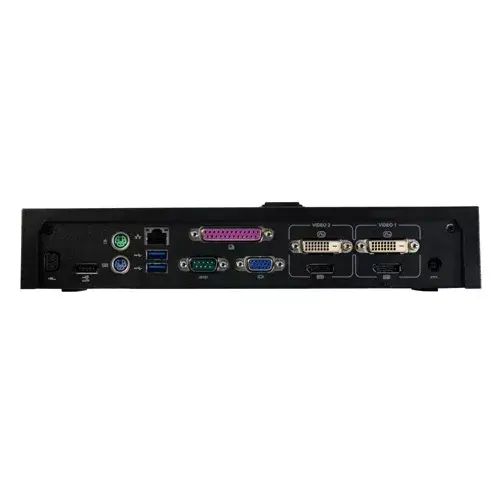
DC-in jack:
The socket/plug where the DC electricity supply connects to the device.
-
Yes
-
Serial ports quantity:
The number of serial ports in a computer or peripheral. A serial port is a serial communication physical interface through which information transfers in or out one bit at a time. The term "serial port" usually identifies hardware more or less compliant to the RS-232 standard, intended to interface with a modem or with a similar communication device. In modern computers and peripherals, serial ports have largely been replaced by USBs and other interfaces.
-
1
-
eSATA/USB 2.0 ports quantity:
The nunber of eSATA/USB 2.0 ports (connection sockets).
-
1
-
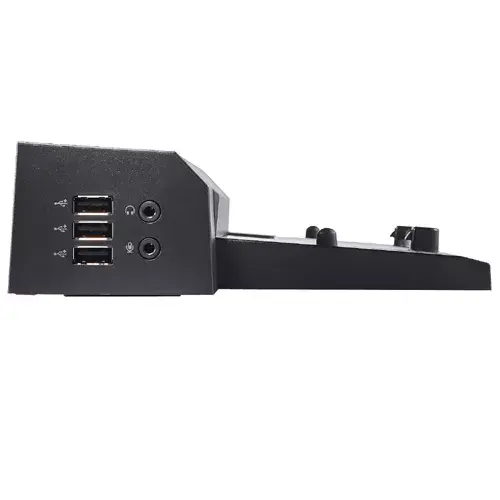
Headphone outputs:
Number of sockets /ports where headphones are connected.
-
1
-
VGA (D-Sub) ports quantity:
Number of VGA (D-Sub) ports (connecting interfaces) in the device. The VGA (D-Sub) connector is a 15 pin connector between a computer and a monitor. It was first introduced in 1987 by IBM.
-
1
-
Microphone in:
The socket where a microphone is connected to the device.
-
Yes
-
PS/2 ports quantity:
The number of PS/2 connectors for keyboards and mice. Its name comes from the IBM Personal System/2.
-
2
-
Parallel ports quantity:
The number of parallel ports. Parallel ports, also known as printer ports, are a type of interface found on computers (personal and otherwise) for connecting peripherals. In computing, a parallel port is a parallel communication physical interface. Parallel ports were common in the 1980s and '90s (mostly conforming to industry standard IEEE 1284) but are now being replaced by USBs and other ports.
-
1
-
Ethernet LAN (RJ-45) ports:
Number of Ethernet LAN (RJ-45) ports (connecting interfaces) in the device. Ethernet LAN (RJ-45) ports allow a computer to connect to the ethernet.
-
0
-
HDMI ports quantity:
The number of sockets (ports) for HDMI connections. HDMI (High-Definition Multimedia Interface) is a compact audio/video interface for transferring uncompressed video data and compressed/uncompressed digital audio data from a HDMI-compliant device ("the source device") to a compatible computer monitor, video projector, digital television, or digital audio device. HDMI is a digital replacement for existing analog video standards.
-
0
-
DVI-D ports quantity:
This is the amount of DVI-I interfaces. Digital Visual Interface (DVI) is a video display interface developed by the Digital Display Working Group (DDWG). The digital interface is used to connect a video source to a display device, such as a computer monitor. DVI-D means DVI digital, which means it can only support digital, but not analog.
-
2
-
DisplayPorts quantity:
Number of DisplayPorts. A DisplayPort is a digital display interface developed by the Video Electronics Standards Association (VESA). The interface is primarily used to connect a video source to a display device such as a computer monitor, though it can also be used to carry audio, USB, and other forms of data.
-
2
-
USB 2.0 ports quantity:
Number of USB 2.0 ports (connecting interfaces) in the device. USB 2.0 was released in April 2000 (now called "Hi-Speed"), adding higher maximum signaling rate of 480 Mbit/s (effective throughput up to 35 MB/s or 280 Mbit/s), USB 2.0 ports are usually black.
-
3
-
USB 3.2 Gen 1 (3.1 Gen 1) Type-A ports quantity:
-
2
-
Connectivity technology:
The technology that enables connectivity of the device, e.g. wired or wireless.
-
Docking