
Filters you can trust. Pure water every day.
In cart {{totalProductsCount}} item(s)
Your cart is empty
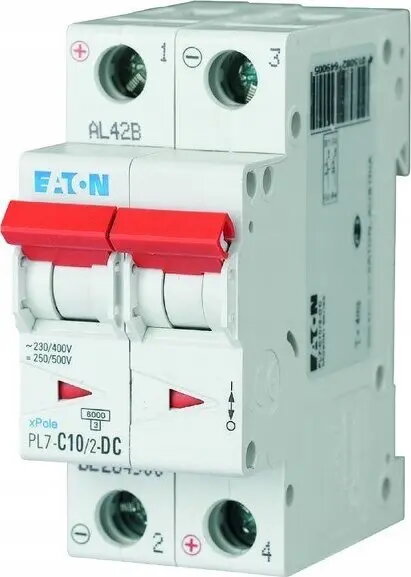
Eaton PL7-C10/2-DC Miniature Circuit Breaker, 2-Pole, 10A, 10kA, DC
The Eaton PL7-C10/2-DC is a high-performance 2-pole miniature circuit breaker specifically engineered for direct current (DC) electrical systems. This device provides essential overcurrent and short-circuit protection, ensuring the safety and operational integrity of industrial and commercial installations. Built to handle demanding electrical environments, it offers consistent performance and reliable circuit interruption when needed.
This miniature circuit breaker stands out due to its robust construction and specialized design for DC applications. It effectively manages electrical loads up to 10A, providing a high breaking capacity of 10kA to handle potential faults safely. The 2-pole configuration allows for simultaneous disconnection of both poles, which is critical for maintaining safety in DC circuits. Its compact design facilitates easy integration into standard distribution boards, while the high-quality materials ensure long-term durability and resistance to environmental stressors.
This circuit breaker is designed exclusively for direct current (DC) applications and should not be used in alternating current (AC) systems, as the arc quenching mechanisms differ significantly. It is also not suitable for circuits exceeding its 10A rated current capacity or environments where the voltage levels exceed the manufacturer's specified DC ratings.
The device is designed for installation on a standard DIN rail within a distribution enclosure. Ensure that the power supply is completely disconnected before beginning the installation process. Secure the breaker firmly onto the rail and connect the DC supply lines to the appropriate input terminals and the load lines to the output terminals, ensuring that polarity is observed as indicated on the device housing. Once installed, verify all connections for tightness and proper contact before restoring power to the circuit.
Regularly inspect the circuit breaker for any signs of physical damage or overheating. It is recommended to perform periodic testing of the switching mechanism to ensure it remains operational. If the breaker trips, investigate the cause of the overcurrent or short circuit before attempting to reset the device.
{{highlightedFeature.featureTitle}}:
{{getProductFeatureValueById(product, highlightedFeature.featureId)}}
{{ productComparisonGenerationError }}