-
Certification:
-
CE, RoHs
-
Full duplex:
A full-duplex system allows communication in both directions, and unlike half-duplex, allows this to happen simultaneously.
-
No
-
Plug and Play:
Indicates whether this product supports is "plug and play". Plug and play is hardware or software that, after being installed ("plugged in"), can immediately be used ("played with"), as opposed to hardware or software which requires configuration.
-
Yes
-
Cable length:
How long the cable is.
-
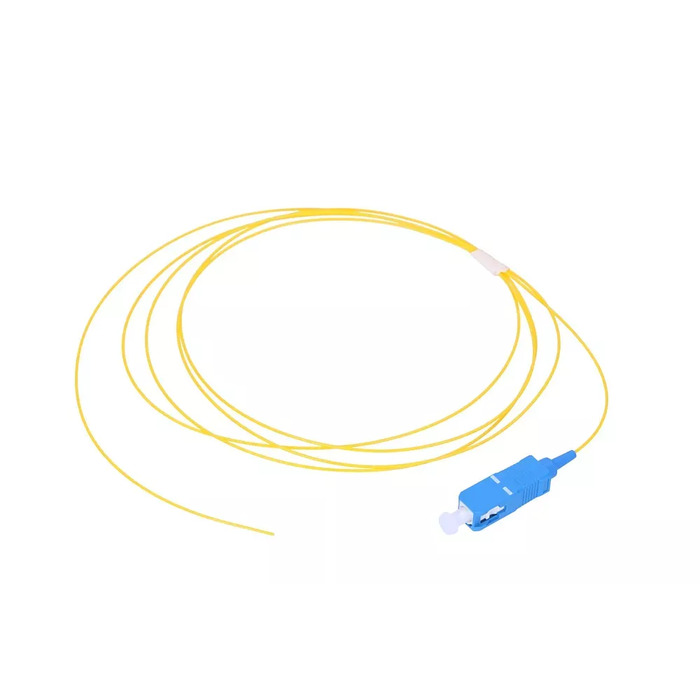
2 m
-
Cable type:
Type of cable e.g. electicity cable, optical cable.
-
FTTH
-
Product colour:
The colour e.g. red, blue, green, black, white.
-
Yellow
-
Connector material:
-
Ceramic
-
Package type:
The type of product package e.g. box.
-
Bag
-
Connector 1:
This is the first connector in the device.
-
SC
-
Connector 2:
This is the second connector in the device.
-
No
-
Cable diameter:
The distance from one side of the cable to the other, with a straight line going through the middle of the cable.
-
0.9 mm
-
Fiber mode structure:
-
Single-mode
-
Jacket material:
-
Polyvinyl chloride (PVC)
-
Connector 1 gender:
The gender of the first connector of the product. Each half of a pair of mating connectors is assigned the designation male or female, the part bearing one or which fits into another being called male.
-
Male
-
Quantity per pack:
-
1 pc(s)
-
Fibre optic type:
The standardised properties of the fiber optic cable.
-
G.657.A1
-
Connector polish type:
-
UPC
-
Test protocol included:
-
Yes