
Powerful EcoFlow stations for energy anywhere!
In cart {{totalProductsCount}} item(s)
Your cart is empty
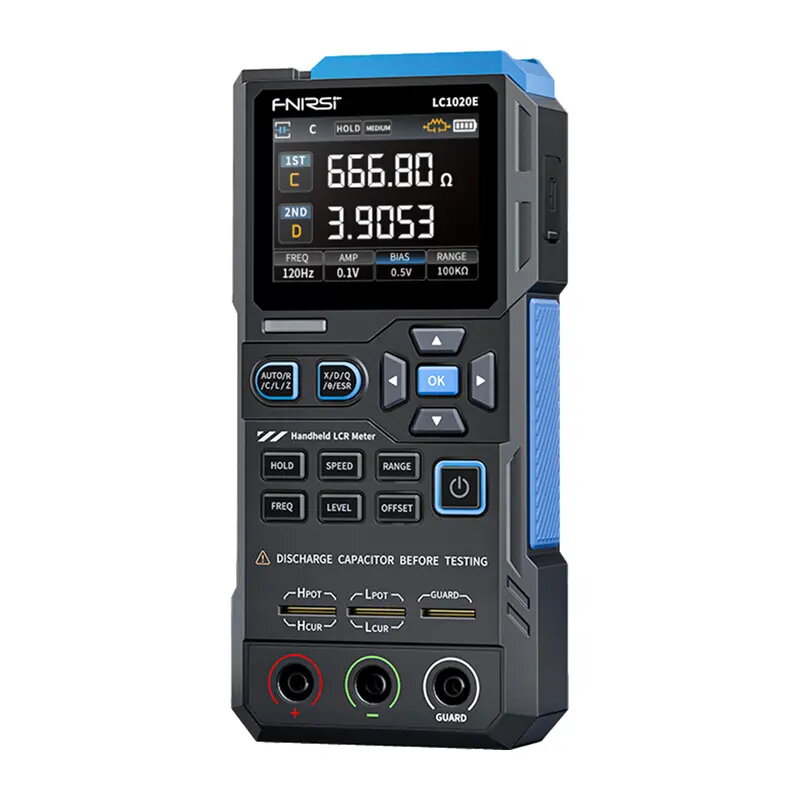
Fnirsi LC1020E Handheld LCR Meter
The Fnirsi LC1020E is a high-precision handheld LCR meter designed for fast and accurate measurements of electronic components. It features automatic component recognition, a wide test frequency range, dual parameter readout, and high measurement resolution. With adjustable voltage levels, built-in polarization, and advanced calibration, it provides stable and reliable results. A color TFT display, data storage function, USB-C rechargeable battery, and automatic shutdown make the device convenient for everyday use in both laboratory and field environments.
The device automatically identifies components as resistors, capacitors, or inductors, switching to the appropriate mode to ensure quick and intuitive testing. Its high measurement precision and basic accuracy allow for reliable analysis of sensitive electronic components. The 2.8-inch TFT display shows two parameters simultaneously, improving readability and speeding up analysis. Furthermore, the adjustable test frequencies and RMS voltage levels allow for precise adaptation to specific component characteristics, while the internal polarization function stabilizes readings for voltage-sensitive parts.
This device is intended for standard electronic component testing and may not be suitable for high-power industrial applications or measurements requiring specialized high-voltage testing beyond its specified range. It is also not designed for in-circuit measurements where external interference or parallel components could significantly affect the accuracy of the readings.
To begin, power on the device and connect the test leads or Kelvin clamps to the measurement terminals. Select the desired test frequency and voltage level based on the component specifications. For maximum accuracy, perform an open or short circuit calibration before starting your measurements. Once configured, connect the component to the terminals; the meter will automatically detect the type and display the primary and secondary parameters on the screen. You can use the comparison function to set nominal values and tolerances for efficient sorting or quality control tasks.
Usage recommendations: Always perform an open or short circuit calibration when changing test leads or after significant changes in ambient temperature to maintain measurement accuracy. Keep the device away from strong electromagnetic fields to prevent interference with sensitive readings.
{{highlightedFeature.featureTitle}}:
{{getProductFeatureValueById(product, highlightedFeature.featureId)}}