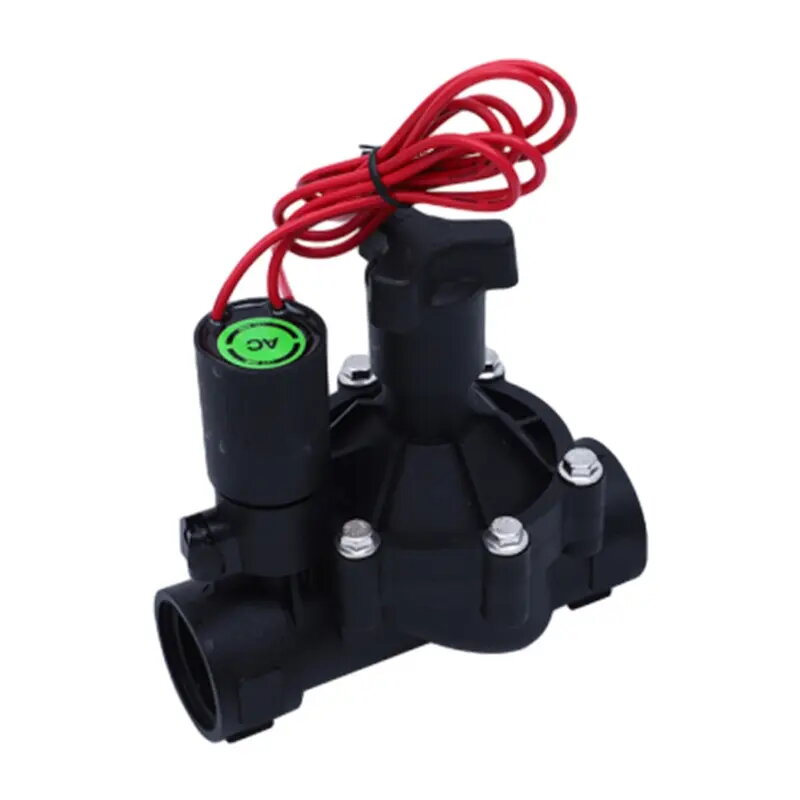
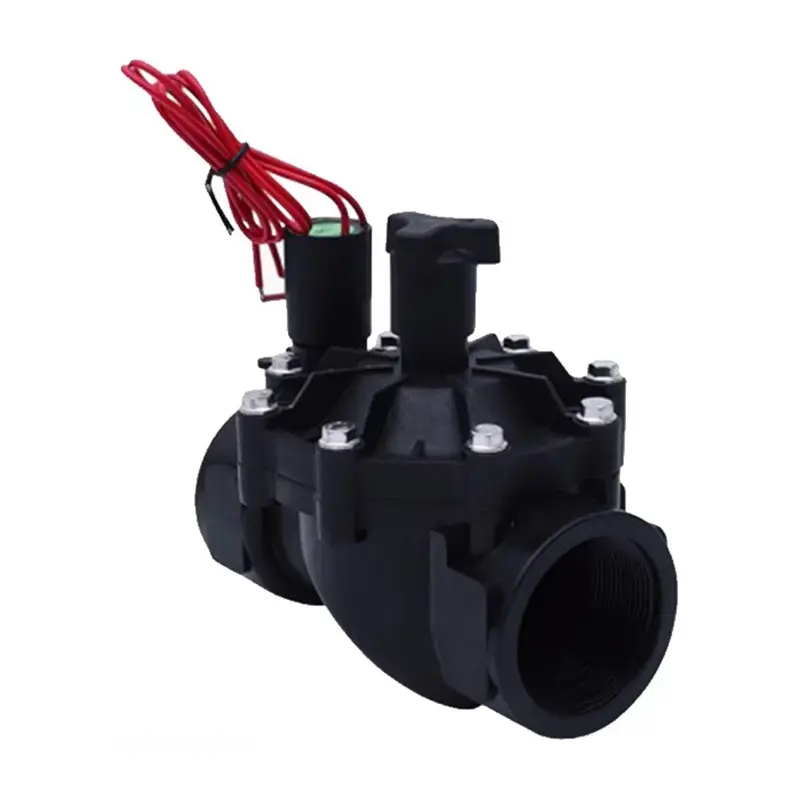
This product page features the Solenoid irrigation valve RainPoint EVA100 1 inch AC, which is compared with similar automatic watering valves: Irrigation valve RainPoint 1" DC Electronic Irrigation Valve BIV025ESC-DC, Garden solenoid valve RainPoint EVD100 DC 1 inch, RainPoint 1" AC Electronic Irrigation Valve BIV025ESC-AC for Automatic Garden Watering, and Irrigation Solenoid Valve Aptel EVD100 DC 1" for Automatic Watering Systems. All these devices share a standard 1-inch connection size and are designed for automated control of garden, lawn, and drip irrigation systems via controllers and timers. The main differences between them lie in the power type (AC or DC), brand, and construction details of specific flow control series.
⚙️ Below is a comparison of key characteristics for these valves, such as power type, brand, compatibility with irrigation controllers, and practical purpose for different watering setups.
| Comparison parameter | Solenoid irrigation valve RainPoint EVA100 1 inch AC | Irrigation valve RainPoint 1" DC Electronic Irrigation Valve BIV025ESC-DC | Garden solenoid valve RainPoint EVD100 DC 1 inch | RainPoint 1" AC Electronic Irrigation Valve BIV025ESC-AC for Automatic Garden Watering | Irrigation Solenoid Valve Aptel EVD100 DC 1" for Automatic Watering Systems | Practical conclusion |
|---|
| Connection type | 1 inch | 1 inch | 1 inch | 1 inch | 1 inch | All reviewed valves provide a standard 1-inch pipe connection suitable for garden systems. |
| Power type | Alternating current (AC) | Direct current (DC) | Direct current (DC) | Alternating current (AC) | Direct current (DC) | The choice between AC and DC depends on the existing electrical setup and the irrigation controller used. |
| Brand | RainPoint | RainPoint | RainPoint | RainPoint | Aptel | RainPoint models share a common watering ecosystem, while the Aptel alternative offers similar functionality under a different brand. |
| Purpose | Zone control, sprinklers, drip systems | Zone control, sprinklers, drip lines | Lawn watering control, sprinklers, drip systems | Zone control, lawns, gardens | Garden, lawn, and agricultural watering setups | All models are suitable for automating watering with timers and controllers, but require a compatible power type. |
◎ The table below evaluates the suitability of each option for various use cases and watering equipment types.
| Use case | Recommended product | Why |
|---|
| Automated watering systems with AC power supply | Solenoid irrigation valve RainPoint EVA100 1 inch AC or RainPoint 1" AC Electronic Irrigation Valve BIV025ESC-AC for Automatic Garden Watering | Both models operate on AC power and are well-suited for stationary controllers using matching line voltage. |
| Low-voltage systems and standalone controllers | Garden solenoid valve RainPoint EVD100 DC 1 inch, Irrigation valve RainPoint 1" DC Electronic Irrigation Valve BIV025ESC-DC, or Irrigation Solenoid Valve Aptel EVD100 DC 1" for Automatic Watering Systems | These valves use DC power operation, making them optimal for low-voltage setups and specialized timers. |
The main difference of the Solenoid irrigation valve RainPoint EVA100 1 inch AC compared to several alternatives is its use of alternating current (AC) instead of direct current (DC). This valve is most suitable for users whose automated watering system and controller are designed to run on AC power. If your infrastructure supports a standard AC mains connection, this model will be a reliable choice for managing irrigation zones and sprinklers.