
Dreame vacuums for fast and efficient cleaning!
In cart {{totalProductsCount}} item(s)
Your cart is empty
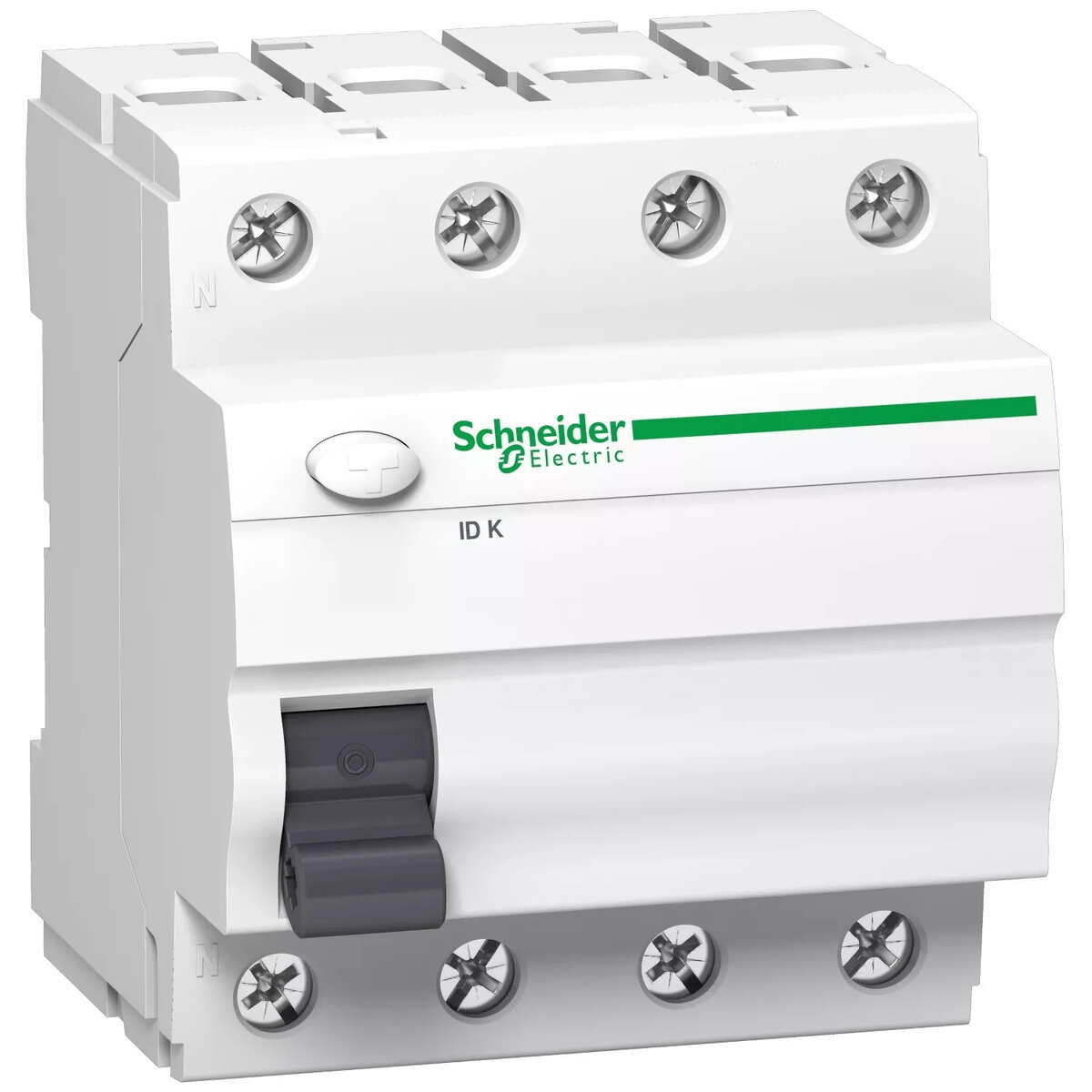
Residual-current device Schneider Electric A9Z04440 Type A 4P 40 A 380–415 V 500 A breaking capacity
Schneider Electric A9Z04440 is a 4-pole Type A residual-current device (RCD) designed to detect AC and pulsating DC leakage currents and to disconnect power in case of earth faults. The device is rated for a nominal current of 40 A and is intended for use on systems with nominal voltages of 380–415 V. With a compact DIN-rail form factor and a breaking capacity of 500 A, this unit is suitable for domestic, commercial and light industrial distribution boards where selective protection against electric shock and fire risk from leakage currents is required.
The Type A detection characteristic provides reliable sensitivity to AC and pulsing DC residual currents that may not be detected by Type AC devices. Its 4-pole construction allows protection of three-phase systems including neutral, and the 40 A rated current matches common circuit requirements for small distribution circuits. The 500 A breaking capacity ensures coordinated operation with upstream overcurrent protective devices in many low-voltage installations. The compact dimensions and DIN-rail mounting permit straightforward integration into standard distribution enclosures.
This RCD does not provide overcurrent protection by itself and must be used in combination with appropriate circuit breakers or fuses sized for the installation. It is not a Type B device and therefore is not suitable where smooth DC residual currents or high-frequency components are expected; such installations may require Type B or other specialised protection. For systems with nominal currents above 40 A or where higher breaking capacity is required, a different device should be selected.
Install the Schneider Electric A9Z04440 on a standard DIN-rail inside the distribution board, ensuring correct orientation and secure mechanical fixing. Connect the incoming three-phase supply and neutral to the designated input terminals and the outgoing load conductors to the output terminals following the wiring diagram supplied by the manufacturer. Use appropriate cable sizes and torque settings as required by local installation rules. Confirm upstream short-circuit protection is present and coordinated with the 500 A breaking capacity of the device. After wiring, perform insulation and functional tests according to local electrical codes to verify correct operation before placing the circuit into service.
Use this RCD together with correctly sized overcurrent protection devices and follow national wiring regulations. Periodically test the device using the test button and include it in routine maintenance checks to ensure continued protection against leakage currents.
{{highlightedFeature.featureTitle}}:
{{getProductFeatureValueById(product, highlightedFeature.featureId)}}
{{ productComparisonGenerationError }}