Save time and money with our discounts!

{{ totalProductsCount }}
In cart {{totalProductsCount}} item(s)
In cart {{totalProductsCount}} item(s)
Total:
{{sum | formatAmount}}
Your cart is empty
How do I choose an electric toothbrush and irrigator?
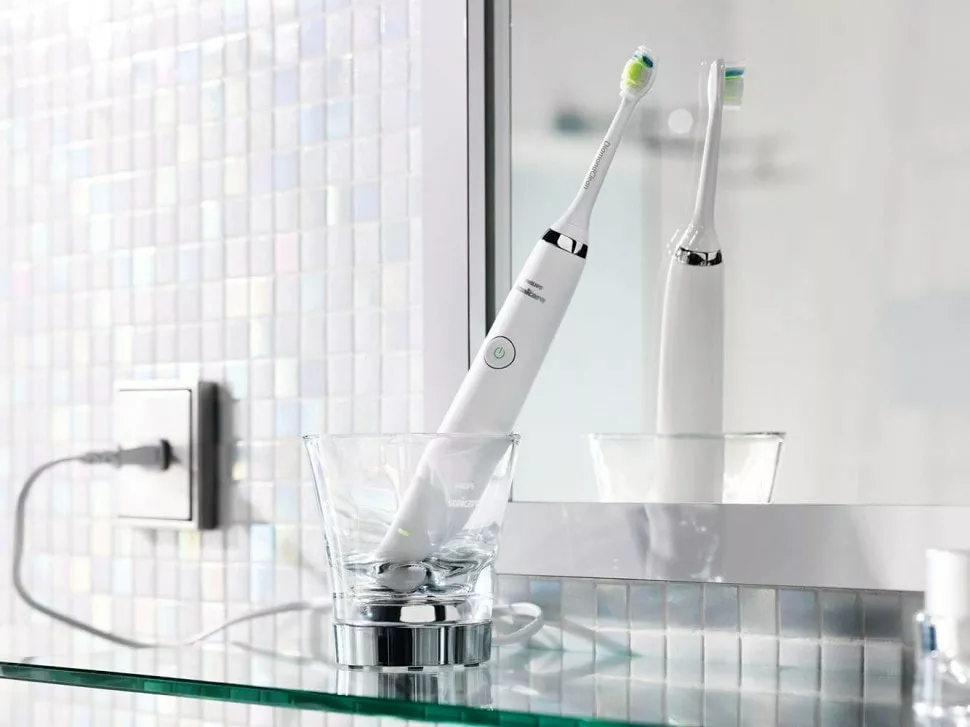
To avoid various kinds of problems with teeth, it is necessary to take care of them. Electric toothbrushes and oral irrigators can help with this. How to choose an electric toothbrush? What to look for when buying an irrigator? How to properly take care of your toothbrush to avoid harmful microorganisms? You will find answers to all these and other questions in this article.
Why do you need an electric toothbrush
The electric toothbrush, thanks to mechanical movements, quickly and efficiently cleans your teeth. The size of the head of an electric toothbrush is smaller than that of a conventional toothbrush (adults up to 30 mm, children up to 25 mm). The size is smaller so that it can clean each tooth as well as the spaces between them, more thoroughly. Recommendation! Before you buy an electric toothbrush, consult your dentist. Based on the condition of your teeth and oral cavity, the doctor will select the model that best suits your needs.
Electric toothbrushes and their technologies
Electric toothbrushes are divided into four types: pulsating, piston, sonic and ultrasonic. Piston technology simulates the operation of a traditional toothbrush. The nozzle head rotates around its axis or moves up and down, while the number of revolutions per minute is from 5 to 18 thousand, depending on the model of the brush. In some models, a pulsation mode is available, which creates vibrations that are transmitted to the bristles of the nozzle and force it to move quickly through the teeth, cleaning their surfaces. Sonic electric toothbrushes perform about 2.4 million movements per minute and at the same time operate at a frequency of up to 20,000 Hz. Studies have shown that when the bristles are 2-3 mm above the surface of the teeth, sonic toothbrushes are able to remove almost 70% of all dirt. Ultrasonic electric brushes reach more than 20000 Hz frequencies when working. A person does not hear sound at such high frequencies, so the operation of the brush seems silent. Toothbrushes of this category are the best for cleaning, and therefore have a correspondingly high price. Different modes of operation are available for different models. For example, the Oral-B iO Series 4 model has 4 different modes of cleaning, which allows you to choose the most suitable one, depending on the situation.
Powering your electric toothbrush
Electric toothbrushes use built-in power sources, including rechargeable and non-rechargeable batteries. If you use your toothbrush every day, rechargeable batteries will be more economical and convenient. But note that over time, the battery capacity decreases, because of which the device will need to be charged more often. Some electric toothbrushes do not have external contacts and exposed ports, and their body is completely sealed. These kinds of models can be used in the shower or bath.
Additional functionality
When brushing your teeth with a lot of pressure on the enamel layer, it will quickly begin to wear out. Therefore, many manufacturers include a pressure sensor in their electric brushes - the ability to track the force with which the brush is pressed against the teeth. If the permissible level of force is exceeded, the brush gives a warning signal. Another useful feature is a timer that tells the user when to start cleaning another part of the mouth. This feature prevents excessive abrasion of tooth enamel in one place. Some models, such as the Philips Sonicare, can be synchronized with a smartphone, which allows you to have additional control over the quality of brushing your teeth.
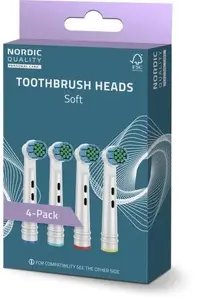
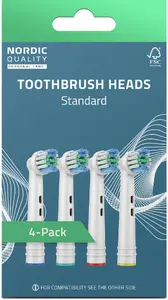
Electric toothbrush heads
Electric brush heads need to be changed every 3-4 months. Reasons for replacement:
- The bristles wear out and become softer
- The ends of the bristles become loose, and microorganisms accumulate on them.
- Bacteria and food debris accumulate between the bristles, and rinsing the brush under running water each time becomes less effective.
Many manufacturers make the bristles in different colors to remind users of the need for replacement. If the color of your bristles has changed, then it is time to replace your brush head. Some models have an indicator that counts the days until the head needs changing. Recommendation! Before you buy electric toothbrush heads, be sure to check their compatibility with your electric toothbrush. It will not be possible to use incompatible heads. Compatibility can be checked in the toothbrush's documentation. In addition to compatibility, the heads differ in shape, purpose and rigidity of the bristles.
Different toothbrush head purposes
Usually, electric toothbrushes come with different types of heads that differ in their purpose of use. For example, the goals may be as follows:
- brush head for brushing teeth;
- brush head for tongue cleaning;
- for massaging the gums and cleaning dental plaque;
- orthodontic and periodontal head;
- plaque removal.
Toothbrush heads based on bristle's softness
When choosing a toothbrush head, be sure to pay attention to the bristle's softness. Bristle softness levels:
- very soft – great for children and adults with sensitive gums or frequent bleeding;
- soft - for people with minor abrasions in the oral cavity and with a tendency for stomatitis;
- medium hardness - for people who do not have serious problems with their teeth and oral cavity;
- hard - for people prone to the formation of plaque. It is important to know that this type of toothbrush head cannot be used every day, otherwise the enamel will quickly wear out, and wounds will appear on the gums. For smokers, lovers of coffee and tea, this type of head will allow you to slightly whiten your teeth.
Electric toothbrush head shapes
Electric toothbrush heads come in various shapes:
- Monobeam - one bundle of bristles that rotates and brushes the teeth. These kinds of heads are suitable for the care of braces.
- Combined - combines oval and round head shapes.
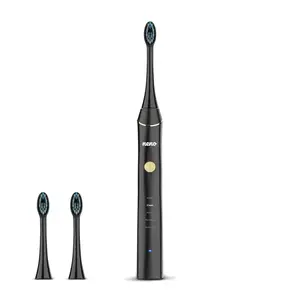
- Sonic - the shape is similar to a standard toothbrush, suitable only for electric toothbrushes with sonic and ultrasonic cleaning technology. A popular model is the AENO DB6 sonic toothbrush
- Cup-shaped - the shape of the head is similar to a round bowl with bristles. Heads of this shape are usually present for toothbrushes with piston-rotating and combined cleaning technology.
Electric toothbrush maintenance
After brushing your teeth, it is not enough just to shake off the brush. In a warm bathroom, harmful microorganisms multiply on the wet bristles of the toothbrush. To avoid this, you should use a toothbrush disinfectant. The ultraviolet lamp inside the disinfectant kills bacteria and microorganisms that may be on the toothbrush and its head. The standard disinfection time is 10 minutes. In some models, this amount of time is set by default, while in others you need to set it yourself. The lamp starts working only when the device is closed, so ultraviolet light will not harm you if, suddenly, the disinfecting device is opened before the end of the cleaning cycle. One of the most popular models of disinfecting devices - Philips UV Sanitizer
Oral irrigators: what are they and why do you need one
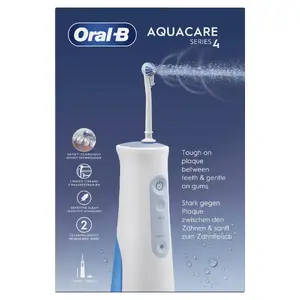
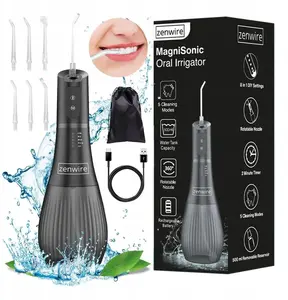
An oral irrigator is a special pump that, thanks to a thin and strong jet, cleans teeth, treats the oral cavity with therapeutic or prophylactic solutions, and massages the gums. In addition, the flow of fluid allows you to flush food debris from the spaces between the teeth or from your braces. Some manufacturers offer oral irrigators with a pulsating jet mode. This type of mode massages the gums and allows you to improve their blood supply.
The different types of oral irrigators
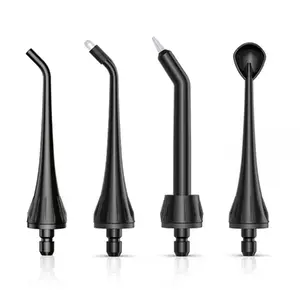
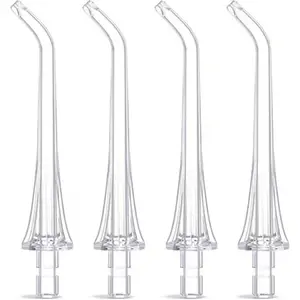
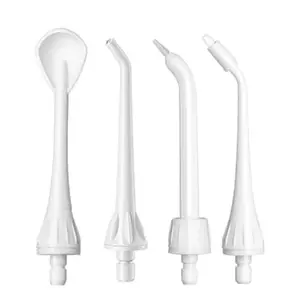
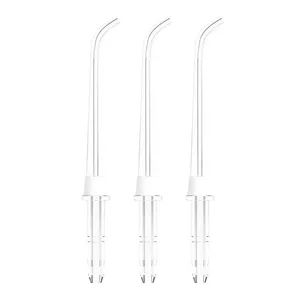
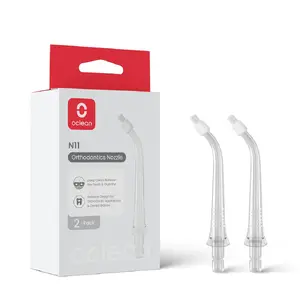
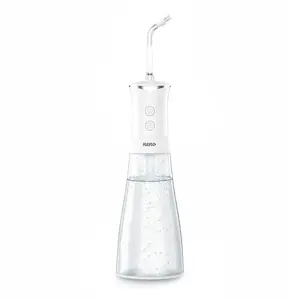
Oral irrigators tend to be either stationary or portable. Stationary irrigators are suitable for home use. They are equipped with a liquid tank, the capacity of which, often, is up to 750 ml, as well as a head that has a small pump for supplying water. Portable irrigators are equipped with a small tank and a less powerful pump, they are great for use when traveling. To prevent the multiplication of harmful bacteria inside the washer's head, it must be cleaned regularly. To prevent plaque from forming in the head, filtered water should be used for rinsing. After washing, it is recommended to wipe it dry, otherwise, in a humid environment, mold may appear. If the head has changed shape or its external appearance, it is necessary to replace it with a new one.
What is a dental center
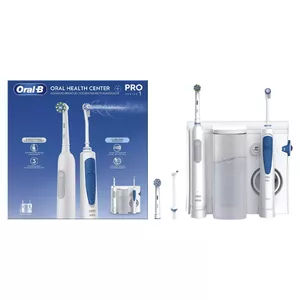
The dental center is a combination of an electric toothbrush, a oral irrigator, two types of heads, a container for storing them and a glass for rinsing fluid. Dental centers work with a cord, with replaceable batteries, or both. They are easy to transport and use when traveling. If you are considering buying a dental center, we recommend that you take a look at the Nicefeel FC163. The kit includes a toothbrush, oral irrigator, heads for various purposes and a place to store it all.
Get it Monday
Get it Monday
Excellent choice
Fast shipping
You save: 66.50 €
You save: 6.00 €
Fast shipping
You save: 38.50 €
Fast shipping
You save: 4.00 €