Dreame vacuums for fast and efficient cleaning!

{{ totalProductsCount }}
In cart {{totalProductsCount}} item(s)
In cart {{totalProductsCount}} item(s)
Total:
{{sum | formatAmount}}
Your cart is empty
Markdown Fiber Optic Cables
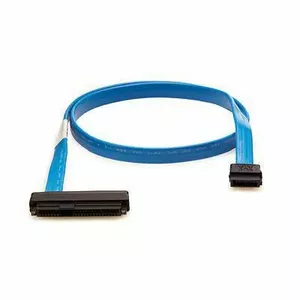
Open box
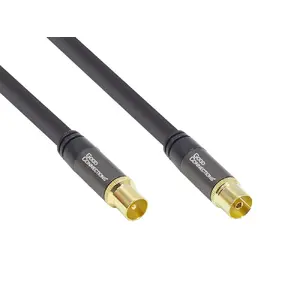
Good Connections
Good Connections Alcasa GC-M2058 coaxial cable RG-6/U 15 m IEC/Koax black
Delivery: 20.11.2026
8.99 €
Renew
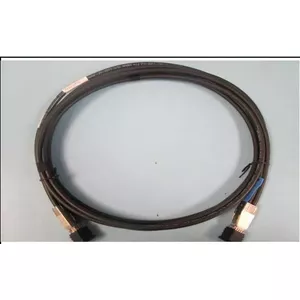
HP Enterprise
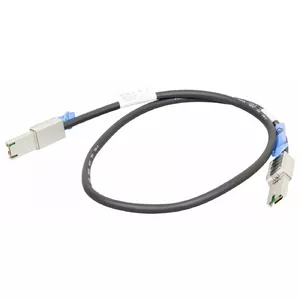
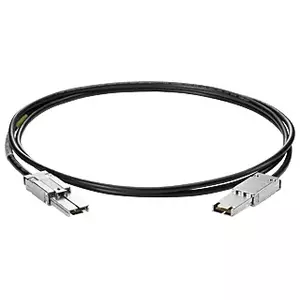
External iPASS x4 MiniSAS cable adapter, HP Enterprise 717433-001-RFB, 4x MiniSAS connectors
Delivery: 20.11.2026
10.99 €
Renew
Renew
HP Enterprise
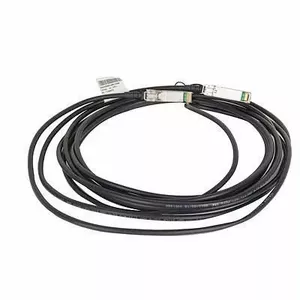
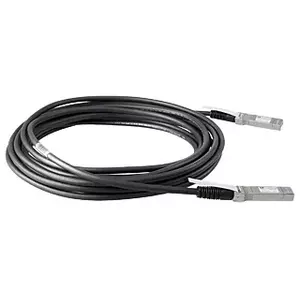
SFP Cable HP Enterprise JG081C-RFB 5 m — active copper SFP+ direct-attach cable, 5-meter length
Delivery: 20.11.2026
26.99 €
Renew

HP Enterprise
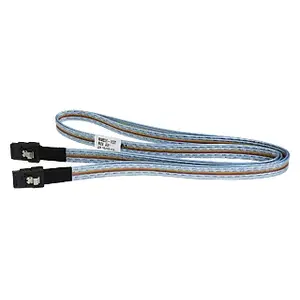
Hewlett Packard Enterprise X240 Direct Attach Copper Cable 10G SFP+ to SFP+ 0.65m
Delivery: 20.11.2026
108.99 €
Renew
Renew
HP Enterprise
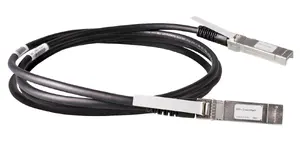
Hewlett Packard Enterprise X240 Direct Attach Copper Cable SFP+ to SFP+ 10GbE 3m JD097C-RFB
Delivery: 02.11.2026
178.49 €
Demo
BlueOptics
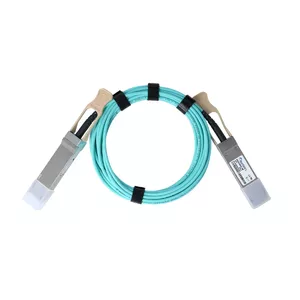
InfiniBand/fibre optic cable BlueOptics UACC-AOC-QSFP28-50M-BO 50m Male/Male
Delivery: 20.11.2026
182.99 €
Renew
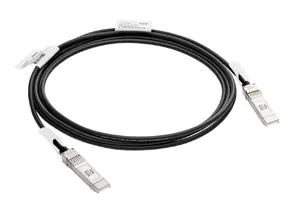
HP Enterprise
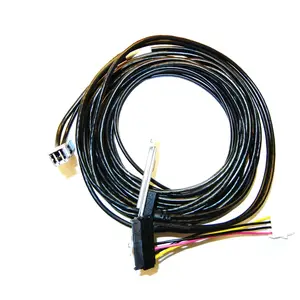
Hewlett Packard Enterprise J9283D-RFB 10G SFP to SFP 3M Direct Attach Copper Cable
Delivery: 20.11.2026
208.99 €
Demo
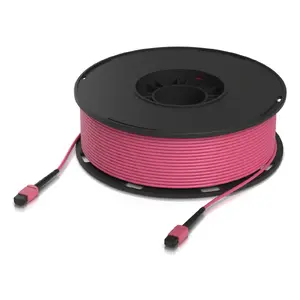
UBIQUITI
Fibre optic cable MPO Ubiquiti UACC-OFC-MA-MPMP-100M 100m OM4
Delivery: 20.11.2026
220.49 €
Renew
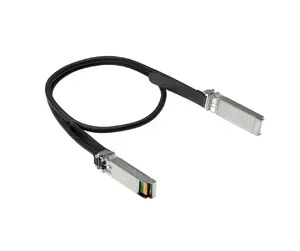
HP Enterprise
Hewlett Packard Enterprise Aruba Networking 50G R0M46A-RFB Fiber Optic Cable
Delivery: 20.11.2026
256.49 €
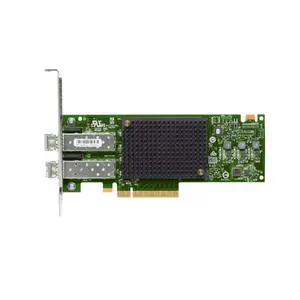
Fibre optic cables are communication cables that transmit data as pulses of light along glass or plastic fibers. They are used to carry large volumes of digital information over short and long distances with low signal loss and immunity to electromagnetic interference. Typical applications include broadband internet backbones, local area networks, data centers, telecommunications links, and specialized industrial or medical systems where high bandwidth and signal integrity are required. Buyers choose fibre optic cables when higher data rates, longer transmission distances, or improved resistance to electrical noise are needed compared with copper cabling. Installation contexts range from outdoor buried or aerial trunk lines to indoor patching and equipment interconnects.
Types of Fibre Optic Cables
Common classifications separate cables by core type, construction, and application.
- Single-mode (SM) — fiber with a small core (≈9 µm) designed for long-distance, high-bandwidth single-laser transmission.
- Multi-mode (MM) — fiber with larger cores (typically 50 µm or 62.5 µm) for shorter-range links using LEDs or VCSELs.
- Simplex and duplex — cable formats with one or two fibers respectively, used for point-to-point links and patching.
- Multi-fiber (ribbon or bundle) — cables containing many fibers for high-density backbones and data center racks.
- Armoured and non-armoured — armoured cables include metal or other protective layers for mechanical damage resistance in harsh environments.
- Indoor, outdoor, and indoor/outdoor rated — construction and jacket materials vary to meet fire codes, moisture resistance, UV exposure, and rodent protection.
What are Fibre Optic Cables used for?
Fibre optic cables support a wide range of data-transport tasks across sectors.
- Telecommunications and internet backbones that require long-haul, high-capacity links.
- Data center interconnects and server-room patching for high-throughput, low-latency connections.
- Local area networks (LANs) and campus networks where higher speeds and longer reaches are needed than copper can provide.
- Industrial control systems and instrumentation where immunity to electromagnetic interference is important.
- Medical imaging and diagnostic equipment that rely on optical transmission for precise signal quality.
- Broadcast and video transmission for high-resolution, uncompressed signals over distances.
Key Differences between Fibre Optic Cables
Key factors affect performance, suitability, and cost of fibre optic cables.
- Bandwidth and reach — single-mode fibers offer higher bandwidth and longer reach than multi-mode fibers.
- Connector and transceiver compatibility — fiber connectors (LC, SC, ST, MPO) and transceiver types must match the cable and equipment.
- Attenuation and dispersion — cable design and fiber type determine signal loss and modal/chromatic dispersion affecting distance and data rate.
- Mechanical protection — armouring, strength members, and jacket materials control durability for installation conditions.
- Environmental ratings — indoor fire rating (e.g., LSZH or riser), outdoor UV and water resistance, and temperature range influence where a cable can be used.
- Fiber count and density — number of fibers per cable affects capacity, space requirements, and termination methods.
How to Choose Fibre Optic Cables?
Selecting the right fibre optic cable involves matching technical characteristics to the intended application and installation constraints.
- Determine link distance and required data rate to choose between single-mode and multi-mode fiber and appropriate transceiver types.
- Choose fiber count and format (simplex, duplex, ribbon) based on port density and future scalability needs.
- Verify connector types and polarity to ensure compatibility with existing equipment and patch panels.
- Consider environmental and mechanical requirements: indoor/outdoor rating, armouring, jacket material, and temperature range.
- Check standards and specifications such as ITU, ISO/IEC, or TIA/EIA recommendations relevant to performance and testing procedures.
- Plan for installation and maintenance: cable routing, bend radius limits, termination, testing (OTDR, loss testing), and spare capacity for upgrades.
Which markdown fiber optic cables are the most popular and affordable in 2026?
The full list of popular models at affordable prices is available on this page. In 2026, the following models show high demand and an excellent price-to-quality ratio:
- ACT 0.5 metre LSZH multimode 50/125 OM2 fiber patch cable duplex with SC connectors for 1.49€
- Fiber Optic Pigtail SC 9/125 SM 2m 0.9mm G657A OS2 for 3.99€
- Pigtail Fiber Optic SC/APC 09/125 1m OS2 single mode SC connector APC grinding for 3.99€
- Optical patch cable SIMPLEX LC/UPC-SC/UPC 9/125um SM 2m OS2 for 5.99€
- Duplex optical patch cable LC-SC 9/125um single-mode 0.5m OS2 G657A for 7.49€
Why is it worth buying markdown fiber optic cables at AiO.lv?
At the AiO.lv online store, you can place an order at a great price with delivery across Latvia — to Riga, Daugavpils, Liepaja, Jurmala, Ventspils, and other cities, as well as throughout Europe. We offer products from leading manufacturers: 3M, Cisco, D-Link, Dell, HAMA, HP, Lenovo, Netgear, NVIDIA, Panasonic, PLANET, WENTRONIC, DIGITUS, LOGILINK, OEM, GEMBIRD, EMOS, TP-LINK, HUAWEI, GOOBAY. When you shop with us, you get:
- official warranty and guaranteed quality;
- convenient payment options (including installment and credit);
- fast and reliable delivery across Latvia and to any EU country.
FAQ
Where can you find a markdown fiber optic cables with cheap prices?
You can buy cheaper at the AiO.lv online store. We offer competitive prices and regular discounts, so you always have the chance to find a great deal.
What is the delivery time for markdown fiber optic cables?
If you place your order today, delivery will take between 1 and 5 business days depending on the chosen method.
How long is the warranty period for markdown fiber optic cables?
Our store provides an official manufacturer’s warranty ranging from 12 to 36 months, depending on the model and brand. If needed, you can always contact our customer service department or the manufacturer’s authorized service center for support.
Are markdown fiber optic cables purchasable with leasing?
Yes, if the selected product costs more than €50. You can learn more about installment purchase options and the terms of application on the Payment page.
Can markdown fiber optic cables be purchased for a company (with VAT)?
Yes. AiO.lv works with legal entities in Latvia and throughout Europe. All product prices are shown with VAT included. In certain cases, a 0% VAT rate may apply — for example, when purchasing from other EU countries with a valid VAT number. We issue an invoice immediately after the order is placed, support BIS electronic invoices, and automatically generate all required accounting documents. To complete a purchase for a company, simply select the company profile during checkout.


