
Save time and money with our discounts!

{{ totalProductsCount }}
In cart {{totalProductsCount}} item(s)
In cart {{totalProductsCount}} item(s)
Total:
{{sum | formatAmount}}
Your cart is empty
Network Media Converters
Get it Today
Get it Today
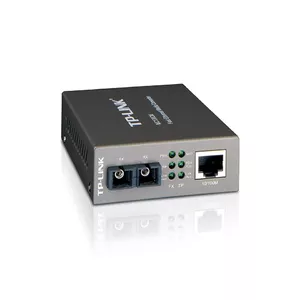
TP-LINK
Media Converter TP-Link MC100CM, 10/100Mbps, Gigabit Ethernet, SC Connector
Delivery: Today
24.99 €
You save: 7.00 €
The discount is valid from 01.07.2026 to 29.07.2026
OEM
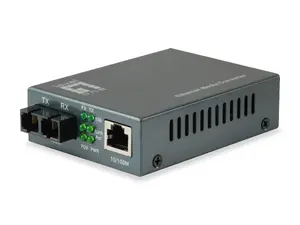
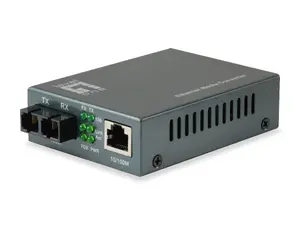
LevelOne FVT-1103 Fast Ethernet Media Converter, RJ45 to SC Single-Mode Fiber, 1310nm, 40km
Delivery: 16.07.2026
47.49 €
40.49 €
You save: 8.50 €
The discount is valid from 01.07.2026 to 29.07.2026
OEM
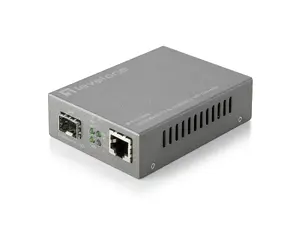
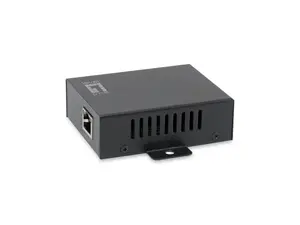
LevelOne FVS-3800 Managed Fast Ethernet Media Converter, RJ45 to SFP
Delivery: 16.07.2026
60.99 €
52.49 €
You save: 9.00 €
The discount is valid from 01.07.2026 to 29.07.2026
OEM
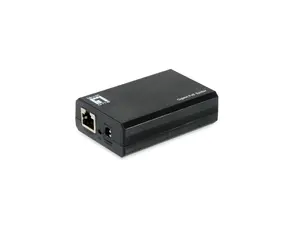
LevelOne 1-Port RJ-45 Gigabit PoE Repeater
Delivery: 16.07.2026
62.99 €
53.99 €
You save: 12.50 €
The discount is valid from 01.07.2026 to 29.07.2026
OEM
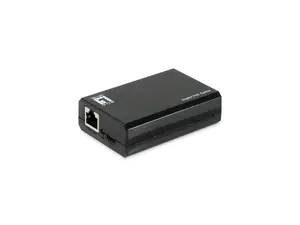
LevelOne Gigabit IEEE802.3bt PoE Splitter 60W
Delivery: 16.07.2026
87.99 €
75.49 €
You save: 14.50 €
The discount is valid from 01.07.2026 to 29.07.2026
OEM
LevelOne Gigabit PoE bt to USB-C PD 3.0 Splitter 50W
Delivery: 16.07.2026
99.99 €
85.49 €
New Arrival
BlueOptics
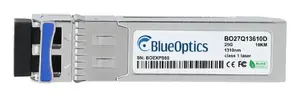
BlueOptics BO28C3443620DIN cSFP Fiber Optic Transceiver Module, 1250 Mbit/s, LC-Duplex, 20km
Delivery: 30.07.2026
94.49 €
You save: 21.00 €
The discount is valid from 01.07.2026 to 29.07.2026
OEM
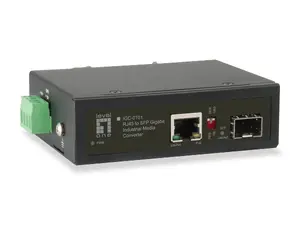
LevelOne IGC-0101 Industrial Gigabit Media Converter, RJ45 to SFP, 1 PoE Output
Delivery: 16.07.2026
159.99 €
138.99 €
You save: 24.50 €
The discount is valid from 01.07.2026 to 29.07.2026
OEM
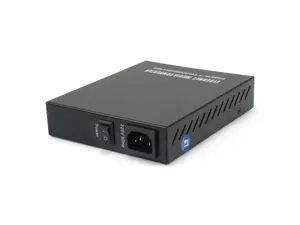
LevelOne FVT-1105 Fast Ethernet Media Converter, RJ45 to SC Single-Mode Fiber, 1550nm, 80km
Delivery: 16.07.2026
169.99 €
145.49 €
You save: 24.50 €
The discount is valid from 01.07.2026 to 29.07.2026
OEM
LevelOne FVM-1000 Managed Fast Ethernet Media Converter RJ45 to SFP
Delivery: 16.07.2026
174.99 €
150.49 €
New Arrival
BlueOptics
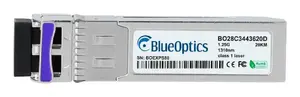
BlueOptics BO28C4334640DIN cSFP Fiber Optic Transceiver Module, 1250 Mbit/s, LC-Duplex, 40km
Delivery: 30.07.2026
150.99 €
You save: 25.50 €
The discount is valid from 01.07.2026 to 29.07.2026
OEM
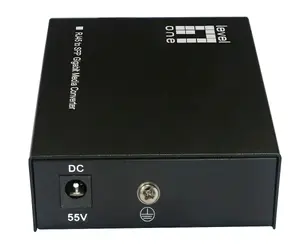
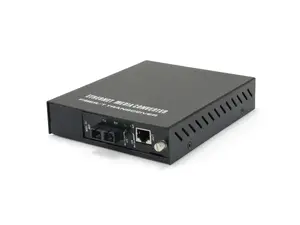
LevelOne RJ45 to SFP Gigabit Media Converter with 802.3bt 90W PoE PSE
Delivery: 16.07.2026
179.99 €
154.49 €
You save: 29.00 €
The discount is valid from 01.07.2026 to 29.07.2026
OEM
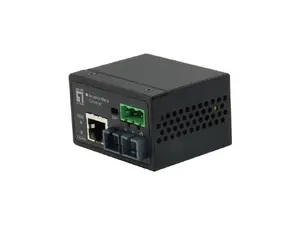
LevelOne FVM-1101 Managed Fast Ethernet Media Converter RJ45 to SC Multi-Mode Fiber
Delivery: 16.07.2026
205.99 €
176.99 €
You save: 31.50 €
The discount is valid from 01.07.2026 to 29.07.2026
OEM
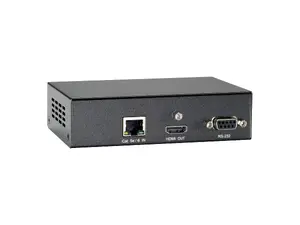
LevelOne Industrial Fast Ethernet Media Converter, RJ45 to SC Multi-Mode Fiber, 2km
Delivery: 16.07.2026
221.99 €
190.49 €
You save: 32.50 €
The discount is valid from 01.07.2026 to 29.07.2026
OEM
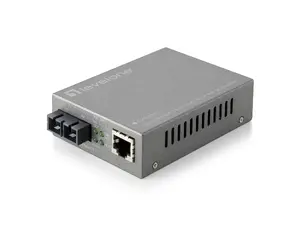
LevelOne HVE-9211PR HDMI over Cat.5 Receiver, HDBaseT, 100m, 802.3af PoE
Delivery: 16.07.2026
222.99 €
190.49 €
You save: 32.50 €
The discount is valid from 01.07.2026 to 29.07.2026
OEM
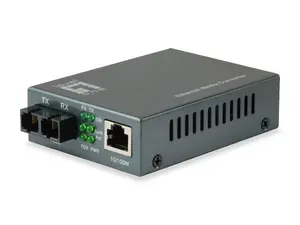
LevelOne FVS-3120 Managed Fast Ethernet Media Converter, RJ45 to SC Single-Mode Fiber, 20km
Delivery: 16.07.2026
222.99 €
190.49 €
You save: 33.50 €
The discount is valid from 01.07.2026 to 29.07.2026
OEM
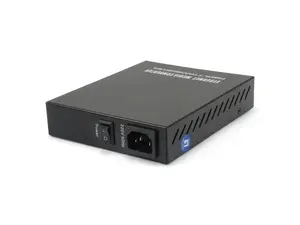
LevelOne FVT-1106 Fast Ethernet Media Converter, RJ45 to SC Single-Mode Fiber, 1550nm, 120km
Delivery: 16.07.2026
235.99 €
202.49 €
You save: 35.50 €
The discount is valid from 01.07.2026 to 29.07.2026
OEM
LevelOne GVM-1220 Managed Gigabit Media Converter, RJ45 to SC Single-Mode Fiber, 20km
Delivery: 16.07.2026
251.99 €
216.49 €
Network media converters are hardware devices that connect different types of network cabling and signal formats, allowing data transmission between copper Ethernet, fiber optic links, and sometimes wireless or legacy interfaces. They are used to extend network reach, integrate fiber segments with existing copper infrastructure, and adapt link types without replacing endpoint equipment. Typical use cases include converting 10/100/1000BASE-T to various fiber standards, enabling long-distance backbone links, and providing fiber connectivity to switches, routers, or IP devices in environments where direct fiber ports are unavailable. Media converters are chosen when cost-effective protocol conversion, physical media adaptation, or distance extension is needed while preserving network speed and management requirements. Selection depends on factors such as data rate, fiber type, connector standard, power options, and whether managed features like link fault detection are required.
Types of Network Media Converters
Common types of network media converters are categorized by supported media, speed, and management capabilities.
- Fiber-to-Copper converters: convert copper Ethernet (RJ45) to fiber optic interfaces (SFP, SC, LC).
- Multimode and Singlemode converters: designed for multimode (MMF) or singlemode (SMF) fiber with different wavelength and distance profiles.
- Speed-specific converters: support 10/100Mbps, 1000Mbps (Gigabit), or 10Gbps links.
- Converter with SFP slots: accept removable SFP/SFP+ transceivers for flexible fiber types and distances.
- Managed and unmanaged converters: unmanaged are plug-and-play; managed include diagnostics, remote monitoring, and link fault pass-through.
- PoE media converters: provide Power over Ethernet passthrough or injection while converting media types.
- Industrial media converters: ruggedized units with extended temperature ranges and DIN-rail or wall-mount options for harsh environments.
What are Network Media Converters used for?
Media converters serve to adapt physical network segments, extend link distances, and maintain connectivity between devices using different cabling standards.
- Extending network reach: converting to fiber to cover distances beyond copper limits (typically >100 meters).
- Integrating fiber into existing copper networks: allowing legacy switches or devices without fiber ports to connect to fiber backbones.
- Protocol and speed adaptation: enabling devices with specific Ethernet speeds to interoperate across different media.
- Providing power and data: PoE-capable converters deliver power to endpoints like IP cameras while converting media.
- Improving electromagnetic compatibility: using fiber to avoid interference in electrically noisy environments or provide isolation.
Key Differences between Network Media Converters
Differences between media converters affect compatibility, performance, and deployment scenarios.
- Media type and connectors: copper RJ45 vs. fiber SC/LC or SFP; connector type determines cable and transceiver choice.
- Fiber type and wavelength: singlemode vs. multimode and corresponding wavelengths (e.g., 850nm, 1310nm, 1550nm) influence distance and transceiver selection.
- Supported speed: 10/100, Gigabit, or 10Gbps support different use cases and require matching endpoints.
- Management features: managed converters provide SNMP, status LEDs, and remote diagnostics; unmanaged are simpler and lower cost.
- Power options: AC adapter, DC input, PoE support, and redundancy affect installation flexibility and reliability.
- Form factor and mounting: standalone desktop units, rack-mount chassis, or industrial housings suit different physical installations.
How to Choose Network Media Converters?
Choosing the right media converter requires checking technical compatibility, environmental requirements, and operational needs.
- Determine link speed and duplex requirements to match converter throughput with connected devices.
- Verify fiber type, connector format, and required wavelength or select SFP-based converters for flexibility.
- Consider distance: singlemode for long runs (kilometers) and multimode for shorter links (hundreds of meters).
- Decide on management needs: choose managed devices when remote monitoring or fault detection is necessary.
- Assess power and mounting: select PoE-capable models for powered endpoints and industrial models for harsh conditions.
- Check compliance and interoperability: confirm standards support (IEEE 802.3, SFP compatibility) and vendor documentation for interoperability with existing equipment.
Which network media converters are the most popular and affordable in 2026?
The full list of popular models at affordable prices is available on this page. In 2026, the following models show high demand and an excellent price-to-quality ratio:
- Media Converter TP-Link TL-FC111B-20 for 11.99€
- Fiber optic transceiver module HPE X130 10G SFP+ LC SR for 19.99€
- Media Converter TP-Link MC100CM, 10/100Mbps, Gigabit Ethernet, SC Connector for 24.99€
- Network media converter TP-Link Omada MC211CS-2, 1000 Mbit/s, single-mode SC/UPC, 20 km, 1x RJ-45 for 25.99€
- Media Converter TP-Link MC112CS 10/100Mbps, 1000 Mbit/s, SC Connector for 29.99€
Why is it worth buying network media converters at AiO.lv?
At the AiO.lv online store, you can place an order at a great price with delivery across Latvia — to Riga, Daugavpils, Liepaja, Jurmala, Ventspils, and other cities, as well as throughout Europe. We offer products from leading manufacturers: allied telesis, APC, Cisco, D-Link, Dell, FUJITSU, HP, Lenovo, Netgear, NVIDIA, PLANET, TRENDNET, DIGITUS, LOGILINK, OEM, Supermicro, Unitek, ATEN, GP, TP-LINK. When you shop with us, you get:
- official warranty and guaranteed quality;
- convenient payment options (including installment and credit);
- fast and reliable delivery across Latvia and to any EU country.
FAQ
Where can you find a network media converters with cheap prices?
You can buy cheaper at the AiO.lv online store. We offer competitive prices and regular discounts, so you always have the chance to find a great deal.
What is the delivery time for network media converters?
If you place your order today, delivery will take between 1 and 5 business days depending on the chosen method.
How long is the warranty period for network media converters?
Our store provides an official manufacturer’s warranty ranging from 12 to 36 months, depending on the model and brand. If needed, you can always contact our customer service department or the manufacturer’s authorized service center for support.
Are network media converters purchasable with leasing?
Yes, if the selected product costs more than €50. You can learn more about installment purchase options and the terms of application on the Payment page.
Can network media converters be purchased for a company (with VAT)?
Yes. AiO.lv works with legal entities in Latvia and throughout Europe. All product prices are shown with VAT included. In certain cases, a 0% VAT rate may apply — for example, when purchasing from other EU countries with a valid VAT number. We issue an invoice immediately after the order is placed, support BIS electronic invoices, and automatically generate all required accounting documents. To complete a purchase for a company, simply select the company profile during checkout.


